


Reviews
Vol. 46: Issue 2 - April 2026
Effectiveness of tinnitus retraining therapy in alleviating tinnitus symptoms: a systematic review and meta-analysis
Summary
Cover Image
Objective. This study systematically evaluated and analysed existing evidence regarding the effectiveness of tinnitus retraining therapy (TRT) in treating tinnitus at different follow-up periods and the factors that influence the choice of treatment.
Databases reviewed. Medline, OpenAIRE, Cochrane Central Register of Controlled Trials (CENTRAL), Scopus, Springer Nature Journals, Science Citation Index Expanded, and PubMed.
Methods. Data were collected from multiple sources. Studies on adults with tinnitus, experiencing stable, bothersome, and chronic symptoms were included. Participants with significant comorbid conditions potentially influencing TRT outcomes and traumatic injuries were excluded.
Results and discussion. A total of 18 articles were included in the qualitative assessment. The studies included encompassed various geographical locations and study settings, with a total of 1712 participants, of whom 1011 underwent TRT and 701 were in the comparison group who were receiving alternative treatments. Gender distribution among participants revealed 1097 males and 596 females. The analysis consistently demonstrated improvements in tinnitus severity and quality of life following TRT, as assessed by Tinnitus Handicap Index, Tinnitus Questionnaire, and Visual Analogue Scale. The meta-analysis revealed significant heterogeneity among studies; however, sensitivity analyses demonstrated consistent results. Additionally, publication bias assessment indicated no systematic bias in effect sizes across studies.
Conclusions. These findings suggest that TRT holds promise as an effective intervention for managing tinnitus. Further well-designed randomised controlled trials are warranted to confirm these findings and advance our understanding of TRT’s efficacy in treating tinnitus.
Introduction
Worldwide more than 740 million adults experience tinnitus; moreover, in more than 120 million individuals it takes a severe form, which can significantly affect their quality of life by disturbing sleep, communication, and work. It can also present with comorbid depression and anxiety 1. Tinnitus is an otological symptom that can be defined as the perception of sound in the absence of an objective corresponding external acoustic stimulus 2. The characteristics of the perceived sound can be described in various ways such as ringing, buzzing, clicking, or pulsations 2. In terms of classification, it can be categorised as either subjective, when the sound is exclusively heard by the patient, or objective, which is less common, when the sound can be heard by an observer 2. A review of epidemiological studies suggested that the main risk factor for developing tinnitus is hearing loss; however, other factors include obesity, smoking, alcohol consumption, certain drugs such as salicylates, quinine, aminoglycoside antibiotics, and some antineoplastic agents, specifically platinum-based drugs 2. Nevertheless, according to a study conducted in Italy by Martines et al., around 30% of cases of tinnitus have an unknown cause 3. Additionally, tinnitus can manifest along with several otological diseases such as otosclerosis and Ménière’s disease. Reduced sound tolerance, known as hyperacusis, frequently coexists as a symptom in 40% of patients with tinnitus, whereas up to 86% of patients who experience hyperacusis also report the presence of tinnitus 2. The underlying mechanisms of tinnitus encompass a wide range of aspects, including the generation of tinnitus at the cellular and system levels 4. For example, at the cellular level, it can arise due to increased neuronal synchronisation, altered neurotransmission, or maladaptive plasticity 5. In contrast, the system level includes the involvement of auditory structures such as the dorsal cochlear nucleus, which has been identified as one of the primary physiological hallmarks of tinnitus, as well as non-auditory structures and changes in functional connections within higher brain regions 4. The neurophysiological model, as proposed by Jastreboff, emphasises the role of abnormal processing of a signal that occurs before it is perceived in the central auditory pathways 5. Consequently, a feedback mechanism can occur, where individuals increasingly focus on the sound because of the distress caused by tinnitus, hence exacerbating the annoyance and causing a vicious cycle 5.
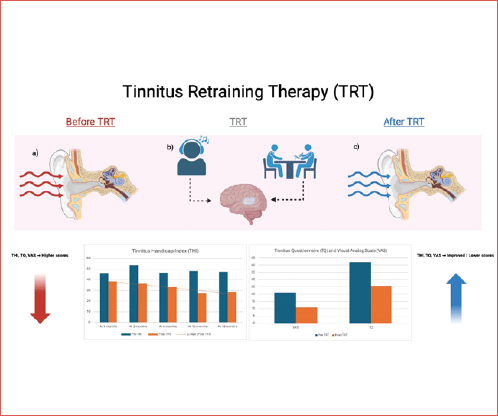
Thus, this model forms the foundation of tinnitus retraining therapy (TRT) 5. TRT is one of the main therapeutic approaches that have been proposed for the treatment of tinnitus, which aims to habituate individuals to tinnitus by reducing its impact on hearing, emotions, and the autonomic system. It typically consists of 2 core components: (1) directive counselling, which aims to educate patients about the neurophysiological mechanisms of tinnitus and help reframe their emotional and cognitive responses to it, and (2) sound therapy, which involves the use of low-level, broadband noise or other sound stimuli to facilitate habituation to the tinnitus signal. This dual approach is based on the neurophysiological model of tinnitus and seeks to promote long-term desensitisation through consistent exposure and guided cognitive adaptation 6,7. Considering the lack of knowledge and inconclusive data about the effectiveness of TRT in comparison with other form of interventions, our aim was to evaluate the impact of TRT on both objective measures of tinnitus severity as well as subjective patients-reported outcomes of tinnitus-related distress at different follow-up periods, and to systematically evaluate the factors that may influence the effectiveness of TRT compared to other treatment modalities. As a result, the outcome of this comprehensive review will provide high-level evidence that can guide clinicians in choosing the most appropriate management approach for patients with tinnitus.
Materials and methods
Overview
The protocol design and reporting in this review were in accordance with the Preferred Reporting Items for Systematic Reviews and Meta-Analyses (PRISMA) 2020 guidelines 8.
Eligibility criteria
The eligibility criteria incorporated a target population of adults above the age of 18 years with tinnitus. The study inclusion criteria included interventional studies (randomised controlled trials, prospective, and pilot studies). Moreover, any review studies or systematic reviews were excluded; studies that did not include TRT, studies with no full-text version, and non-English studies were excluded as well. Studies that used smart TRT, partial TRT, TRT combined with another intervention, or any TRT form other than the classical TRT (sound therapy and counselling) were excluded.
Information sources
A comprehensive search was conducted using Medline, OpenAIRE, Cochrane Central Register of Controlled Trials (CENTRAL), Scopus, Springer Nature Journals, Science Citation Index Expanded, and PubMed. The search terms were “Tinnitus Retraining Therapy” AND (“Tinnitus” OR “Ringing in the ears”) AND “Effectiveness” AND “Treatment”.
Selection process
Two reviewers (DMA and GEA) independently performed title and abstract literature screening. They also performed a full-text assessment of eligibility using predefined criteria. Any disagreement between the 2 reviewers was resolved by a third independent reviewer (MAG).
Data extraction and variables extracted
Data extraction was independently performed by 3 reviewers (DMA, GEA, and SMA). Data were extracted from eligible articles using a predesigned data collection sheet by the lead author (MAG). Variables extracted from the articles included study characteristics such as the last author’s name, year of publication, study design, total study duration, and blinding. Additionally, detailed information regarding the study participants was extracted, encompassing variables such as the total number of participants, the setting in which the study took place, demographics (age, gender), and specific details regarding tinnitus duration and site. Moreover, the intervention and outcomes of the studies were carefully examined. Adverse events related to TRT were also assessed and recorded. Furthermore, various scales and measurements were considered to evaluate tinnitus severity and related factors. These included assessments such as the Tinnitus Handicap Inventory (THI), Tinnitus Questionnaire (TQ), and Visual Analog Scale (VAS).
Risk of bias assessment
Risk of bias assessment was performed by 2 reviewers (MAG and YIA). The Cochrane Risk of Bias tool (RoB) was used to assess the risk of bias for the randomised studies included. The Methodological Index for Non-Randomized Studies (MINORS) was used for the non-randomised studies. Any differences in the assessments were discussed between the reviewers until consensus was reached.
Statistical analysis
In executing the meta-analysis for this systematic review, the lead author (MAG) used RevMan statistical software version 5.4. The analysis focused on the TRT in comparison to any alternative treatments (including tinnitus masking, acceptance and commitment therapy, tailor-made notched music training, and standard of care), utilising continuous data represented by mean values and standard deviations. The statistical methodology encompassed the generic inverse variance method, implementing a random-effects model for analysis. The effect measure used was the mean difference, with a 95% confidence interval applied to both individual studies and the overall analysis. Post-meta-analysis, comprehensive assessments, including heterogeneity assessment, sensitivity tests, and regression tests, were conducted to ensure a thorough understanding of the study results and enhance the robustness of the findings.
Results
Study selection
A total of 1,085 records were exported from the included databases. These records were screened for duplicates and assessed for inclusion or exclusion. Screening by abstract and title was conducted, identifying 110 duplicate articles and excluding 845. The remaining 130 articles underwent a full-text assessment. A total of 107 articles were excluded either due to being duplicates or because they did not meet eligibility criteria. Finally, 18 articles were included in the qualitative assessment 9-26. Further details are illustrated in Figure 1.
Study characteristics
All the studies included were conducted between 2005-2023. Fourteen studies focused on comparing TRT to alternative interventions, and the remaining 4 studies focused on TRT without a control group. These studies were conducted in India, USA, Japan, Italy, Mexico, Sweden, Australia, China, Greece, and Slovakia. Regarding study design, 8 studies were prospective, and 10 were randomised controlled trials (RCTs). The characteristics of the studies are summarised in Table I. This systematic review included 1,712 participants, of whom 1,011 underwent TRT and 701 were in the comparison group (which included tinnitus masking, tinnitus educational counselling, wait-list control, acceptance and commitment therapy, tailor-made notched music training, placebo, mindfulness-based tinnitus stress reduction, partial TRT, vasoactive drugs, and general counselling). Overall, there were 1,097 males and 596 females, based on the reported numbers. Determining the exact number of tinnitus cases based on their specific sites is challenging because of the lack of data in many studies. From the available information, 140 patients had unilateral tinnitus, whereas 28 patients experienced it in both ears. The overall duration of tinnitus ranged from 3 months to 8 years. In certain studies, the type of tinnitus was reported, and the total numbers were as follows: tonal characteristic in 188 patients, hissing in 11, ringing in 6, rhythmic in 5, narrow band in 25, pure tone in 44, low frequencies in 7, high frequencies in one, crickets in one, and a mix of more than 2 sounds in 6. The effectiveness of the intervention was assessed using different tools, including Tinnitus Handicap Index (THI) at different follow-up periods, Tinnitus Questionnaire (TQ), and Visual Analogue Scale (VAS). These tools provide subjective and objective measurements of the improvement in tinnitus distress and symptoms, as shown in Tables II and III.
Interventions
All studies focused on TRT as the primary intervention, whereas the comparison group received any alternative treatment. Among 11 studies conducted by Bauer et al. 10, Henry et al. 13, Chatterjee et al. 14, Scherer et al. 16, Westin et al. 19, Forti et al. 20, Henry et al., Tong et al. 24, Henry et al. 23, Korres et al. 25, and Bauer et al. 22, the pre- and post-treatment outcomes of TRT using THI were compared. In all these studies, post-treatment THI scores significantly improved. Regarding the TQ, studies conducted by Kumar et al. 9, Scherer et al. 16, Tyler et al. 21, and Henry et al. 23 consistently demonstrated a reduction in TQ scores following treatment with TRT. The studies conducted by Hatanaka et al. 11, Nemade et al. 15, Scherer et al. 16, Forti et al. 20, Tong et al. 24, Korres et al. 25, and Bauer et al. 22 all showed a reduction in VAS following treatment with TRT. Furthermore, placebo, tailor-made notched music training, and general counselling all led to reductions in the VAS scores. More details are illustrated in Table III.
Risk of bias
As the studies had different designs, the risk of bias needs to be assessed using 2 different tools: the Cochrane Risk of Bias tool (RoB) and the MINORS assessment tool for comparative and non-comparative studies. The RoB results are illustrated as Forest plots in Figures 2-5. Using the RoB tool, the findings varied across domains. In the first domain, many studies (3 of 10) demonstrated a low risk of bias, while 2 had some concerns, and 5 had a high risk of bias. For the second domain, 8 out of 10 studies showed a low risk of bias, with only 2 studies identified as having a high risk. All 10 studies were rated as having a low risk of bias in the third domain. In the fourth domain, 5 were categorised as having a low risk of bias, while 5 studies were classified as having a high risk. Interestingly, all 10 studies had a high risk of bias in the fifth domain. Based on this assessment, a substantial proportion of the studies exhibited a high risk of bias in multiple domains, particularly concerning participant selection and allocation concealment. While some studies demonstrated a low risk of bias in certain domains, concerns regarding incomplete outcome data and other sources of bias were prevalent across all studies. Overall, the collective assessment suggested a moderate to high risk of bias in most of the studies, underscoring the importance of cautious interpretation when utilising their findings. Regarding the MINORS assessments, 2 comparative studies demonstrated a low risk of bias. However, among the non-comparative studies, 3 studies were classified as having a low risk of bias, indicating robust methodological quality, whereas three were identified as having a moderate risk of bias, suggesting potential limitations.
Meta-analysis results
TINNITUS HANDICAP INDEX
The meta-analysis for THI indicated an overall significant effect size of -0.56 (95% CI: -0.65, -0.46, p value < 0.0001), implying that THI was in favour of the TRT group. Further details are shown in the Forest plot in Figure 2. The analysis also yielded a substantial I2 statistic of 86.7% and a Q statistic of 30, among the subgroup analysis of the treatment follow-up, indicating variation and heterogeneity across different periods, and highlighting the potential differences in the effect of TRT on follow-up. Despite the high heterogeneity, all subgroup analyses were significant and favoured TRT. Apart from the subgroup analysis after THI after 3 months of follow-up, the results were not significant but were in favour of the TRT group. Possible causes of heterogeneity among different subgroups could be clinical, with 3 studies having relatively small TRT groups compared to control groups. Moreover, the blinding process was performed in only a few studies, which can cause statistical heterogeneity among the studies included in the meta-analysis. Sensitivity analysis was performed to explore the effect of heterogeneity on the overall conclusions. For the first subgroup analysis, which is THI outcomes after one month, the results revealed an effect size of 0.17 (95% CI: -0.09, 0.43, p value = 0.20) with an I2 substantially decreased to 61%. This shifts the results towards favouring the control group at one month follow-up. In the second subgroup analysis, THI outcomes after 3 months, a shift in the results was also observed. It revealed an effect size of 0.32 (95% CI: 0.01, 0.62, p value = 0.04) with I2 results decreased to 0%. These significant observations indicate that THI outcomes during the first 3 months were not in favour of the TRT group. For the rest of the subgroup analyses, THI outcomes after 6-18 months, I2 values were reduced, and the sensitivity analysis supported the assumed conclusion. It revealed an effect size of -0.41 (CI: -0.72, -0.11, p value = 0.007), -0.92 (CI: -1.26, -0.58, p value = 0.00001), and -1.56 (CI: -1.93, -1.20, p value = 0.0001), respectively, which indicates that THI outcomes are in favour of the TRT group at 6-18 months of follow-up. Further details are given in Figure 3.
TINNITUS QUESTIONNAIRE AND VISUAL ANALOGUE SCALE
The meta-analysis indicated an overall effect size of 0.10 (CI: -0.18, 0.39, p value = 0.48), implying that TQ is in favour of the control group. Another analysis was performed for the VAS, revealing a significant effect size of 0.51 (CI: 0.26, 0.77, p value < 0.0001), which also implied that VAS was in favour of the control group. Further details are provided in Figures 4 and 5.
PUBLICATION BIAS
Egger’s regression test results showed an intercept of -5.3054, with a Z-score of -0.5100 and a p value of 0.6101, indicating no significant publication bias. Additionally, the Q moderator coefficient was estimated to be 0.2194, with a Z-score of -0.4684 and a p value of 0.6395, suggesting no selective publication of studies based on their results.
Discussion
The systematic review included 18 studies conducted between 2005 and 2023, examining the efficacy of TRT in managing the symptoms of tinnitus. TRT consistently emerged as the primary intervention, with various comparison groups receiving alternative treatments. In our meta-analysis, we assessed THI outcomes across multiple follow-up intervals: 1, 3, 6, 12, and 18 months. Before sensitivity analysis, all time points showed statistically significant improvement in favour of TRT, except for 3-month follow-up intervals. However, after sensitivity analysis, the effect remained significant only at the 6- and 12-month follow-ups. This aligns with the theoretical foundation of TRT, which emphasises gradual habituation and neuroplastic adaptation over time, highlighting its value as a long-term intervention rather than a short-term fix.
In this systematic review, THI was the main outcomes assessor and in almost all the RCTs included it was used and showed an improvement post TRT. This was in concordance with what was reported in a non-randomised prospective study by Korres et al. In their analysis of 63 patients with chronic tinnitus who received either TRT or vasodilators as control group, a set of assessment tools, including THI, were used to follow and examine patients; the analysis of the results was in favour of the TRT group 25. In another study by Westin et al., TRT was compared to acceptance and commitment therapy (ACT). The main outcome of their study is that ACT was superior to the TRT group regarding the THI 19. This difference may stem from how THI reflects psychological coping. ACT directly addresses emotional distress through acceptance and mindfulness strategies, which could lead to better THI outcomes than TRT, which focuses more on auditory habituation. Furthermore, this could explain the observed delay in efficacy of TRT, with subjective improvements on THI in which the improvement was evident only after 6 months. Neuronal adaptation and reorganisation within the auditory cortex require sustained exposure to therapeutic interventions, explaining the gradual reduction in tinnitus-related distress observed over the treatment period. Additionally, TRT primarily targets habituation mechanisms, and its therapeutic effects extend beyond mere auditory habituation. Through structured counselling sessions, patients develop cognitive and behavioural coping strategies, fostering resilience and adaptive responses to tinnitus-related stressors.
Ultimately, the choice of treatment in tinnitus should be based on individual preference and needs. The patient’s understanding of the treatment is very important. In a study by Lapenna et al., it was reported that early termination of TRT and lower treatment efficacy are anticipated among patients who were uncertain about the effectiveness of the proposed therapeutic intervention. Indeed, inadequate motivation to adhere to the TRT structure and inaccurate expectations regarding its outcomes may lead to unsatisfactory treatment results 27. TRT involves reshaping the brain’s response to tinnitus stimuli, leading to a decreased emotional and physiological reaction to the perceived sound. Neuroplasticity plays a pivotal role in TRT, as the brain undergoes adaptive changes in response to repetitive exposure to tinnitus signals. These neural adaptations enable the brain to filter out irrelevant tinnitus signals, thereby diminishing their perceived severity. Additionally, TRT incorporates cognitive-behavioural mechanisms to address the emotional and cognitive components of tinnitus. Patients are educated about the nature of tinnitus and guided through cognitive restructuring techniques to alter negative perceptions and beliefs surrounding the condition. Behavioural interventions such as relaxation techniques and sound therapy are also utilised to promote coping skills and enhance the patient’s ability to manage tinnitus-related distress. By synergistically engaging habituation, neuroplasticity, and cognitive-behavioural mechanisms, TRT offers a holistic approach to managing tinnitus and improving the patient’s quality of life 28,29. Nevertheless, through the meta-analysis we observed that TRT could be the choice for patients who are willing to commit to the habituation process and those seeking a long-term management rather than immediate relief of symptoms. This observation is supported by the fact that THI outcome improvements start to be statistically significant after 6 months of treatment, which is related to the structure and the main aim of TRT; namely, it aims to help individuals habituate to the perception of tinnitus, thereby reducing its impact on their daily life on the long term 30. Lastly, TRT is a unique modality to treat tinnitus and has been shown to lead to long-lasting improvements for many individuals with a sustained relief from symptoms of tinnitus.
Limitations
A notable limitation of our study is its exclusive focus on the classical form of TRT, excluding other variations such as partial TRT, simplified TRT, smartphone-based TRT, and TRT combined with other treatment modalities. While this narrowed focus may limit the generalisability of our findings across all TRT approaches, it also serves as a strength by allowing for a more precise and homogeneous evaluation of the efficacy of classic TRT. Future research should aim to investigate and compare these alternative TRT variations to provide a more comprehensive understanding of their relative effectiveness in managing tinnitus symptoms.
Conclusions
This systematic review and meta-analysis revealed a significant overall effect favouring TRT in reducing tinnitus-related distress. These findings underscore TRT’s potential as an effective therapeutic intervention for tinnitus, while highlighting the importance of addressing methodological limitations in future research to optimise treatment outcomes.
Conflict of interest statement
The authors declare no conflict of interest.
Funding
This research did not receive any specific grant from funding agencies in the public, commercial, or not-for-profit sectors.
Author contributions
MAG: has contributed to the major part of this project and he is the first author, contributed to designing the study protocol, PROSPERO proposal submission, creating the tables and data extraction sheet, data extraction from the included articles, risk of bias assessment, conduction of the meta-analysis and other statistical tests, manuscript writing, proofreading and editing; SA, MAG: contributed to the research idea; SA: contributed to literature screening and writing the manuscript; GEA: contributed to the literature review and manuscript writing; DMA: contributed to the manuscript writing and risk of bias assessment; YIA: contributed to the manuscript writing; MM, HA: contributed by supervising the project, reviewing and proofreading the manuscript. All authors have read and approved the final manuscript.
Ethical consideration
The study protocol was registered in the International Prospective Register of Systematic Reviews (PROSPERO) (ID: CRD42023486687).
The research was conducted ethically, with all study procedures being performed in accordance with the requirements of the World Medical Association’s Declaration of Helsinki.
Written informed consent was obtained from each participant/patient for study participation and data publication.
Availability of data and materials
All data generated or analyzed during this study are included in this published article and its supplementary information files.
History
Received: November 22, 2024
Accepted: July 27, 2025
Figures and tables
Figure 1. The PRISMA flowchart showing the screening process of articles based on the study inclusion and exclusion criteria.
Figure 2. Forest plot of THI outcomes across studies at different follow-up periods.
Figure 3. Forest plot of THI outcomes across studies at different follow-up periods, after sensitivity analysis.
Figure 4. Forest plot of tinnitus questionnaire outcomes.
Figure 5. Forest plot of the visual analogue scale outcomes.
| Included studies | Country | Study design | Blinding | Site of tinnitus (N) | Duration of tinnitus (years) | Total number of participants | Age | Gender | ||||||
|---|---|---|---|---|---|---|---|---|---|---|---|---|---|---|
| Unilateral | Bilateral | TRT | Control | Total | TRT | Control | Male | Female | ||||||
| Alonso-Valerdi, 2023 18 | Mexico | RCT | - | 28 | 6 | - | 15 | 56 | 71 | < 29, 29-60, and > 60 | - | 34 | 39 | |
| Tong, 2022 24 | China | RCT | Single blinded | - | - | > 0.5 | 54 | 58 | 112 | 42.8 (12.9) | 31 (57.4) | 64 | 48 | |
| Chatterjee, 2021 14 | India | RCT | - | - | - | - | 30 | 30 | 60 | 45 (3.7) | - | 30 | 30 | |
| Scherer, 2019 16 | USA | RCT | Single blinded | 84 | - | - | 51 | 100 | 151 | 51.1 (12.6) | SoC: 49.9(10), partial TRT: 50.9 (11.2) | 107 | 44 | |
| Bauer, 2017 10 | USA | RCT | - | - | - | 1-5 | 19 | 19 | 38 | 18-75 | 18-75 | 26 | 12 | |
| Henry, 2016 13 | USA | RCT | - | - | - | - | 34 | 114 | 148 | 60.1 (10.1) | 61.7 (9.8) | 177 | 4 | |
| Tyler, 2012 21 | Australia | RCT | Double blinded | - | - | 4-5 | 19 | 44 | 63 | 57(10) | 22 | 30 | 18 | |
| Westin, 2011 19 | Sweden | RCT | Single blinded | - | - | 8.3 | 20 | 42 | 62 | 50.9 (12.9) | ACT = 53.5 (12.8)/ WLC = 49.5 (11.8) | 55 | 29 | |
| Henry, 2006 23 | USA | RCT | - | - | - | - | 64 | 59 | 123 | 58.7 (10.5) | 61 (9.6) | 117 | 6 | |
| Bauer, 2011 22 | USA | Quasi-RT | - | - | - | - | 21 | 22 | 43 | 57(10) | TM: 58(6), counselling: 55(10) | 22 | 20 | |
| Kumar, 2023 9 | India | Prospective | - | 28 | 22 | - | 50 | NA | 50 | 18-40 | - | - | - | |
| Nemade, 2019 15 | India | Prospective | Single blinded | - | - | 1-2.3 | 58 | NA | 58 | 28-75 | - | 32 | 26 | |
| Korres, 2010 25 | Greece | Prospective | - | - | - | - | 33 | 30 | 63 | 63.7 (13.4) | 63.9 (13.2) | 33 | 30 | |
| Ariizumi, 2010 17 | Japan | Prospective | - | - | - | 11 | 270 | - | 270 | Median = 62 | - | 151 | 119 | |
| Forti, 2009 20 | Italy | Prospective | - | - | - | 3 | 45 | - | 45 | 54(14) | - | 29 | 16 | |
| Hatanaka, 2008 11 | Japan | Prospective | - | - | - | - | 90 | 127 | 217 | 60.39 (11.7) | 61 (11.4) | 118 | 99 | |
| Baracca, 2007 12 | Italy | Prospective | - | - | - | - | 51 | - | 51 | 20-79 | - | 34 | 17 | |
| Suchova, 2005 26 | Slovakia | Prospective | - | - | - | - | 55 | - | 55 | 55.6 | - | 14 | 31 | |
| Total | - | - | - | 140 | 28 | - | 1011 | 701 | 1712 | - | - | 1097 | 596 | |
| SoC: standard of care; ACT: acceptance and commitment therapy; WLC: wait-list control, TM: tinnitus masking; RCT: randomized control trial. | ||||||||||||||
| 1st month/ 1st follow-up | ||||||||
|---|---|---|---|---|---|---|---|---|
| Included studies | Intervention | Control group | Tinnitus handicap inventory - TRT | Tinnitus handicap inventory - control | ||||
| Pre | Post | Delta | Pre | Post | Delta | |||
| Tong, 2022 24 | TRT | C5 | 40.5 (19.4) | 31.5(18) | -8.9 | 41.5 (21.7) | 24.6 (17.3) | -16.8 |
| Henry, 2016 13 | TRT | C1, C2, C3 | 49.2 (24.9) | 40.8 (2.4) | -8.3 | C1: 52.6 (21.3), C2: 49.5 (23.1), C3: 47.5 (24.2) | C1: 46.2 (2.2), C2: 47.3 (2.3), C3: 52.1 (2.5) | C1: -6.3, C2: -2.2, C3: +4.6 |
| Westin, 2011 19 | TRT | C3, C4 | 40.5 (19.4) | 31.5(18) | -8.9 | C3: 49.2 (17.4), C4: 45.2 (14.9) | - | |
| Henry, 2006 23 | TRT | C1 | 52.6(8) | 51.6 (15.1) | -1.1 | 53.8(7) | 52 (9.7) | -1.8 |
| Hatanaka, 2008 11 | TRT | C6 | 48.8 (25.9) | 36.3 (23.8) | -12.5 | 36.6 (27.4) | - | - |
| After 3 months | ||||||||
| Chatterjee, 2021 14 | TRT | C5 | 98 | 43.64 | -54.36 | 97 | 37.9 | -29.1 |
| Scherer, 2019 16 | TRT | C9, C8 | 37.8(13) | 31.5 (20.5) | -6.3 | C6: 42.3 (20.7), C7: 38.6 (18.7) | C6: 30.4 (20.7)C7: 36.3(17.7) | C6: -11.9, C7: -2.3 |
| Henry, 2006 23 | TRT | C1 | 49.1 (19.3) | 44.3 (4.7) | -4.8 | 54.2 (18.6) | 48.08 (4.63) | -6.18 |
| Westin, 2011 19 | TRT | C3, C4 | 47 (18.1) | 43.2 (20.7) | -3.7 | C3:49.2 (17.4), C4:45.2 (14.9) | C3: 48.2(21), C4: 27.4 (19.1) | C3: -0.9, C4: -17.8 |
| Hatanaka, 2008 11 | TRT | C6 | 48.8 (25.9) | 30.5 (22.3) | -18.3 | 36.6 (27.4) | - | - |
| Tong, 2022 24 | TRT | C7 | 40.5 (19.4) | 27.8 (18.4) | -12.6 | 41.5 (21.7) | 21.7 (18.2) | -19.7 |
| After 6 months | ||||||||
| Scherer, 2019 16 | TRT | C9, C8 | 37.8(13) | 25.8 (16.4) | -12 | C9: 42.3 (20.7)C8: 38.6 (18.7) | C9: 31.6 (18.6)C8: 33.4 (18.4) | C9: -10.7, C8: -5.2 |
| Bauer, 2017 10 | TRT | C9, C10 | 46.7 (14.7) | 26.4 (14.1) | -20.3 | C9: 49.3 (15.5)C10: 48.8 (15.9) | C9: 35.8 (15.7) C10: 33.8 (14.9) | C9: -13.5, C10: -15 |
| Henry, 2016 13 | TRT | C1, C2, C3 | 49.2 (24.9) | 38.13 (2.99) | -11.07 | C1: 52.6 (21.3), C2: 49.5 (23.1), C3: 47.5 (24.2) | C1:42.6 (2.6)C2:42.3 (2.7)C3: 50.5(3) | C1: -9.9, C2: -7.1, C3: +3 |
| Henry, 2006 23 | TRT | C1 | 49.1 (19.3) | 34.9 (6.7) | -14.19 | 54.2 (18.6) | 48.23 (16.8) | -6.03 |
| Hatanaka, 2008 11 | TRT | C6 | 48.8 (25.9) | 28.3 (23.9) | -20.5 | 36.6 (27.4) | - | - |
| Westin, 2011 19 | TRT | C3, C4 | 47 (18.19) | 40.2 (21.3) | -6.7 | C3:49.2 (17.4) C4:45.2 (14.9) | C3: -, C4: 27.1 (21.5) | C3: -, C4: -18.1 |
| After 12 months | ||||||||
| Scherer, 2019 16 | TRT | C10, C9 | 37.8(13) | 29.2 (17.4) | -8.6 | C10: 42.3 (20.7)C9: 38.6 (18.7) | C10: 27.2 (19.1)C9: 26.4 (14.6) | C10: -15.1, C9: -12.2 |
| Bauer, 2017 10 | TRT | C9, C10 | 46.7 (14.7) | 18.6 (10.9) | -28.1 | C9: 49.3 (15.5)C10: 48.8 (15.9) | C9: 30.7 (15.4) C10: 28.9 (13.6) | C9: -18.6, C10: -19.9 |
| Henry, 2016 13 | TRT | C1, C2, C3 | 49.2 (24.9) | 37.4 (3.4) | -11.7 | C1: 52.6 (21.3), C2: 49.5 (23.1), C3: 47.5 (24.2) | C1: 41.16(3), C2: 39.9 (3.21)C3: - | C1: -11.4, C2: -9.6, C3: - |
| Henry, 2006 23 | TRT | C1 | 49.1 (19.3) | 32.5 (8.9) | -16.5 | 54.2 (18.6) | 46.5 (2.9) | -7.7 |
| Korres, 2010 | TRT | C11 | 61 | 21 | -40 | 62 | 56 | -6 |
| After 18 months | ||||||||
| Westin, 2011 19 | TRT | C3, C4 | 47 (18.1) | 41.8 (18.7) | -5.14 | C3:49.2 (17.4), C4:45.2 (14.9) | C3: -, C4: 28.1 (17.8) | C3: -, C4: -17.08 |
| Scherer, 2019 16 | TRT | C9, C8 | 37.8(13) | 31.5 (20.5) | -6.3 | C9: 42.3 (20.7)C8: 38.6 (18.7) | C9: 29.5(17), C8: 29.2 (17.2) | C9: -12.8, C8: -9.4 |
| Bauer, 2017 10 | TRT | C9, C10 | 46.7 (14.7) | 17.3 (12.3) | -29.4 | C9: 49.3 (15.5)C10: 48.8 (15.9) | C9: 33.4 (20.5)C10: 30.3 (19.8) | C9: -15.9, C10: -18.5 |
| Henry, 2016 13 | TRT | C1, C2, C3 | 49.2 (24.9) | 35.7 (3.4) | -13.5 | C1: 52.6 (21.3), C2: 49.5 (23.1), C3: 47.5 (24.2) | C1: 41.7(3) C2: 41.5 (3.2) C3: - | C1: -10.8, C2: -7.9, C3: - |
| Henry, 2006 23 | TRT | C1 | 49.1 (19.3) | 10.8 (32.4) | -38.2 | 54.2 (18.6) | 43.7 (5.1) | -10.5 |
| Bauer, 2011 22 | TRT | C12 | 48 | 30 | 18 | 55 | 37 | -18 |
| Forti, 2009 20 | TRT | - | 57.8 (23.6) | 31.5 (19.7) | -26.3 | - | - | - |
| C1: tinnitus masking; C2: tinnitus educational counselling; C3: wait-list control; C4: acceptance and commitment therapy; C5: tailor-made notched music training; C6: placebo; C7: mindfulness based tinnitus stress reduction; C8: partial TRT; C9: standard of care; C10: standard of care per-protocol; C11: vasoactive drugs; C12: general counselling. | ||||||||
| Tinnitus questionnaire | ||||||||
|---|---|---|---|---|---|---|---|---|
| Included studies | Intervention | Control group | TRT | Control | ||||
| Pre | Post | Delta | Pre | Post | Delta | |||
| Kumar, 2023 9 | TRT | - | 27.7 (3.6) | 5.2 (0.9) | -22.5 | - | - | - |
| Scherer, 2019 16 | TRT | C3, C4 | 56.4 (11.9) | 39 (19.2) | -17.4 | C3: 54.4 (11.5) C4: 54.6 (11.2) | C3: 35.9 (15.3) C4: 37.3 (16.8) | C3: -18.5 C4: -17.3 |
| Tyler, 2012 21 | TRT | C1, C2 | 42(18) | 33(19) | -9 | C1: 51(23) C2: 47(25) | C1: 46(31), C2: 29(8) | C1: 5, C2: -18 |
| Visual analogue scale | ||||||||
| Tong, 2022 24 | TRT | C5 | 4.5 (1.6) | 4 (2.06) | -0.5 | 4.29 (1.94) | 3.1 (1.7) | -1.12 |
| Scherer, 2019 16 | TRT | C3, C4 | 6.2 (2.2) | 5.1 (2.5) | -1.1 | C3: 6.4 (2.2), C4: 6.3 (2.1) | C3: 4.2 (5.2), C4: 4.3(3) | C3: -2.2 C4: -2 |
| Nemade, 2019 15 | TRT | - | 6.7 (2.1) | 2.1 (2.6) | -4.5 | - | - | - |
| Bauer, 2011 22 | TRT | C2 | 60.5 | 30 | -30.5 | 63.5 | 48 | -15.1 |
| Korres, 2010 25 | TRT | - | 5.2 (0.2) | 3.2 (0.2) | -2 | - | - | - |
| Forti, 2009 20 | TRT | - | 6.8 (0.3) | 3.2 (0.7) | -3.5 | - | - | - |
| Hatanaka, 2008 11 | TRT | C6 | 57.8 (20.2) | 28.3 (23.9) | -29.5 | 47.9(23) | 37.8 (20.2) | -10.1 |
| C1: tinnitus masking; C2: general counselling; C3: partial TRT; C4: standard of care; C5: tailor-made notched music training; C6: placebo. | ||||||||
References
- Jarach C, Lugo A, Scala M. Global prevalence and incidence of tinnitus: a systematic review and meta-analysis. JAMA Neurol. 2022;79:888-900. doi:https://doi.org/10.1001/jamaneurol.2022.2189
- Baguley D, McFerran D, Hall D. Tinnitus. Lancet. 2013;382:1600-1607. doi:https://doi.org/10.1016/S0140-6736(13)60142-7
- Martines F, Bentivegna D, Piazza F. Investigation of tinnitus patients in Italy: clinical and audiological characteristics. Int J Otolaryngol. 2010;2010. doi:https://doi.org/10.1155/2010/265861
- Saeed S, Khan Q. The pathological mechanisms and treatments of tinnitus. Discov. 2021;9. doi:https://doi.org/10.15190/d.2021.16
- Phillips J, McFerran D. Neurophysiological model-based treatments for tinnitus. Cochrane Database Syst Rev. 2019;2019. doi:https://doi.org/10.1002/14651858.CD008248.pub2
- Lee H, Jung D. Recent updates on tinnitus management. J Audiol Otol. 2023;27:181-192. doi:https://doi.org/10.7874/jao.2023.00416
- Nondahl D, Cruickshanks K, Dalton D. The impact of tinnitus on quality of life in older adults. J Am Acad Audiol. 2007;18:257-266. doi:https://doi.org/10.3766/jaaa.18.3.7
- Page M, McKenzie J, Bossuyt P. The PRISMA 2020 statement: an updated guideline for reporting systematic reviews. Int J Surg. 2021;88. doi:https://doi.org/10.1016/j.ijsu.2021.105906
- Kumar M, Sahoo L. Effect of tinnitus retraining therapy in normal hearing individuals with subjective tinnitus: an observational study. Indian J Otolaryngol Head Neck Surg. 2023;75:596-604. doi:https://doi.org/10.1007/s12070-023-03668-7
- Bauer C, Berry J, Brozoski T. The effect of tinnitus retraining therapy on chronic tinnitus: a controlled trial. Laryngoscope Investig Otolaryngol. 2017;2:166-177. doi:https://doi.org/10.1002/lio2.76
- Hatanaka A, Ariizumi Y, Kitamura K. Pros and cons of tinnitus retraining therapy. Acta Otolaryngol. 2008;128:365-368. doi:https://doi.org/10.1080/00016480701730760
- Baracca G, Forti S, Crocetti A. Results of TRT after eighteen months: our experience. Int J Audiol. 2007;46:222-227. doi:https://doi.org/10.1080/14992020601175945
- Henry J, Stewart B, Griest S. Multisite randomized controlled trial to compare two methods of tinnitus intervention to two control conditions. Ear Hear. 2016;37:E346-E359. doi:https://doi.org/10.1097/AUD.0000000000000330
- Chatterjee N, Chattopadhyay D, Chatterjee I. Management of tinnitus in COVID-19 outbreak – A comparative study between mindfulness based tinnitus stress reduction and tinnitus retraining therapy. Int Tinnitus J. 2021;25:29-33. doi:https://doi.org/10.5935/0946-5448.2021007
- Nemade S, Shinde K. Clinical efficacy of tinnitus retraining therapy based on tinnitus questionnaire score and visual analogue scale score in patients with subjective tinnitus. Turk Arch Otorhinolaryngol. 2019;57:34-38. doi:https://doi.org/10.5152/tao.2019.3091
- Scherer R, Formby C, Gold S. Tinnitus retraining therapy vs standard of care and tinnitus-related quality of life. JAMA Otolaryngol Head Neck Surg. 2019;145:597-608. doi:https://doi.org/10.1001/jamaoto.2019.0821
- Ariizumi Y, Hatanaka A, Kitamura K. Clinical prognostic factors for tinnitus retraining therapy with a sound generator in tinnitus patients. J Med Dent Sci. 2010;57:45-53.
- Valerdi L, Ibarra-Zárate D, Torres-Torres A. Comparative analysis of acoustic therapies for tinnitus treatment based on auditory event-related potentials. Front Neurosci. 2023;17. doi:https://doi.org/10.3389/fnins.2023.1059096
- Westin V, Schulin M, Hesser H. Acceptance and commitment therapy versus tinnitus retraining therapy in the treatment of tinnitus: a randomised controlled trial. Behav Res Ther. 2011;49:737-747. doi:https://doi.org/10.1016/j.brat.2011.08.001
- Forti S, Costanzo S, Crocetti A. Are results of tinnitus retraining therapy maintained over time? 18-month follow-up after completion of therapy. Audiol Neurootol. 2009;14:286-289. doi:https://doi.org/10.1159/000212106
- Tyler R, Noble W, Coelho C. Tinnitus retraining therapy: mixing point and total masking are equally effective. Ear Hear. 2012;33:588-594. doi:https://doi.org/10.1097/AUD.0b013e31824f2a6e
- Bauer C, Brozoski T. Effect of tinnitus retraining therapy on the loudness and annoyance of tinnitus: a controlled trial. Ear Hear. 2011;32:145-155. doi:https://doi.org/10.1097/AUD.0b013e3181f5374f
- Henry J, Schechter M, Zaugg T. Clinical trial to compare tinnitus masking and tinnitus retraining therapy. Acta Otolaryngol Suppl. 2006;556:64-69. doi:https://doi.org/10.1080/03655230600895556
- Tong Z, Deng W, Huang X. Efficacy of tailor-made notched music training versus tinnitus retraining therapy in adults with chronic subjective tinnitus: a randomized controlled clinical trial. Ear Hear. 2023;44:670-681. doi:https://doi.org/10.1097/AUD.0000000000001318
- Korres S, Mountricha A, Balatsouras D. Tinnitus retraining therapy (TRT): outcomes after one-year treatment. Int Tinnitus J. 2010;16:55-59.
- Suchova L. Tinnitus retraining therapy – The experiences in Slovakia. Bratisl Lek Listy. 2005;106:79-82.
- Lapenna R, Molini E, Cipriani L. Long-term results of tinnitus retraining therapy in patients who failed to complete the program. Audiol Res. 2021;11:1-9. doi:https://doi.org/10.3390/audiolres11010001
- Jastreboff P, Hazell J. Tinnitus Retraining Therapy. Cambridge University Press; 2004.
- Han B, Lee H, Kim T. Tinnitus: characteristics, causes, mechanisms, and treatments. J Clin Neurol. 2009;5:11-19. doi:https://doi.org/10.3988/jcn.2009.5.1.11
- Jastreboff P. 25 years of tinnitus retraining therapy. HNO. 2015;63:307-311. doi:https://doi.org/10.1007/s00106-014-2979-1
Downloads
License

This work is licensed under a Creative Commons Attribution-NonCommercial-NoDerivatives 4.0 International License.
Copyright
Copyright (c) 2026 Società Italiana di Otorinolaringoiatria e chirurgia cervico facciale
How to Cite
- Abstract viewed - 1745 times
- PDF downloaded - 191 times