


Annual congress report
Vol. 46: 112 TH CONGRESS SIOECHCF - OFFICIAL REPORT 2026
A systematic review of surgical outcomes and postoperative complications based on free flap selection for reconstructing primary or recurrent locally advanced laryngeal-hypopharyngeal tumours
Summary
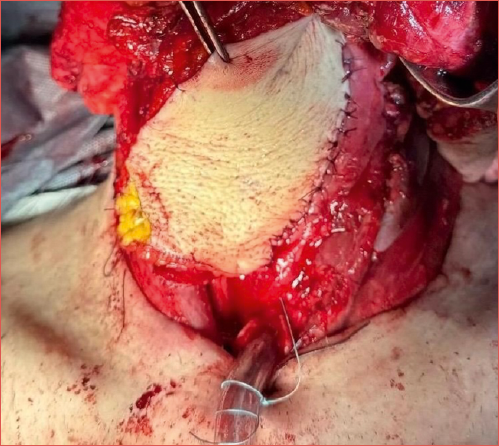
Cover Image
Objective. To evaluate surgical outcomes and postoperative complications according to free flap selection in patients undergoing reconstruction after total or extended pharyngolaryngectomy for locally advanced (cT3-T4a) laryngeal-hypopharyngeal squamous cell carcinoma (SCC).
Methods. A systematic review was conducted following PRISMA guidelines. PubMed/MEDLINE, EMBASE, Cochrane and OVID databases were searched for studies published between 2000 and 2025. Adult patients undergoing partial or circumferential pharyngeal reconstruction with free flap reconstruction were included. Outcomes of interest were flap failure, pharyngocutaneous fistula (PCF), stricture and functional results. Odds ratios (OR) were calculated when feasible.
Results. Twenty-three retrospective studies including 1,849 patients were analysed. The jejunal free flap (JFF) was the most commonly used reconstruction (78%), followed by the anterolateral thigh (ALT) flap (5%). Overall flap survival was high, with total flap necrosis occurring in 2.7% of cases. JFF reconstruction was associated with lower rates of stricture (3.8%) and PCF (3.3%) compared with ALT (9.2% and 5.5%, respectively). ALT reconstruction showed a significantly increased risk of stricture compared to JFF (OR 2.51, p = 0.0002).
Conclusions. Free flap reconstruction after pharyngolaryngectomy is reliable, with high flap survival rates. The JFF remains associated with lower rates of luminal complications, particularly in circumferential defects, while the ALT flap represents a valid alternative. Flap selection should be individualised, and further prospective studies with standardised outcomes are warranted.
Introduction
Locally advanced laryngeal and hypopharyngeal squamous cell carcinomas (cT3-T4a) represent a challenging subset of head and neck malignancies, owing to their aggressive biological behaviour, complex regional anatomy, and significant functional implications 1,2. Despite advances in organ-preservation protocols, surgical resection remains a cornerstone of treatment for selected primary tumours, particularly in cases with cartilage invasion, extralaryngeal spread, or in salvage settings after failure of non-surgical therapies. In this context, total or extended laryngectomy with partial or circumferential pharyngectomy is frequently required, resulting in complex defects that demand reliable reconstructive solutions in all cases where the residual pharyngeal mucosa is inadequate for primary closure 3.
Microvascular free flap reconstruction has become the standard of care for restoring digestive tract continuity following ablative surgery for advanced laryngeal-hypopharyngeal cancer. Pedicled flaps (e.g., pectoralis major or supraclavicular flaps) can be used as reconstructive options in patients unfit for microvascular free tissue transfer, or as second-line salvage flaps after free flap failure. Over the past decades, several free flaps have been proposed and refined, including the radial forearm (RFFF), anterolateral thigh (ALT), jejunal (JFF), and, less commonly, other fasciocutaneous or musculocutaneous options 4-6. Each flap type offers distinct advantages and limitations in terms of tissue characteristics, donor-site morbidity, operative time, and functional outcomes, particularly in terms of swallowing and speech rehabilitation 7.
The choice of free flap is influenced by multiple factors, including defect size and geometry, circumferential versus partial pharyngeal reconstruction, patient-related variables (such as body habitus and comorbidities), prior radiotherapy (RT), and surgeon’s experience. However, there is still no clear consensus on the optimal reconstructive option for primary or recurrent locally advanced laryngeal-hypopharyngeal tumours. Reported outcomes vary widely across studies, especially with regard to postoperative complications such as pharyngocutaneous fistula (PCF), flap failure, strictures, wound infections, and donor-site morbidity 8.
This issue is particularly relevant in the setting of salvage surgery, where previous RT or chemoradiotherapy (ChT-RT) significantly increases the risk of postoperative complications and may influence flap selection. Furthermore, as survival outcomes improve, functional recovery and quality of life have gained increasing importance, underscoring the need for evidence-based reconstruction strategies that minimise morbidity while optimising functional results.
Although numerous retrospective series have reported surgical and functional outcomes following free flap reconstruction in advanced laryngeal-hypopharyngeal cancer, the available evidence remains fragmented, heterogeneous, and sometimes conflicting. To date, no comprehensive systematic review with meta-analysis has specifically compared surgical outcomes and postoperative complications according to the type of free flap in patients undergoing reconstruction for primary or recurrent cT3-T4a laryngeal-hypopharyngeal tumours.
The aim of the present systematic review and meta-analysis is therefore to critically evaluate and quantitatively synthesise the available evidence on surgical outcomes and postoperative complications based on free flap selection in this clinical setting. By comparing different reconstructive options, this study seeks to provide clinically meaningful data to support surgical decision-making and to identify areas where further high-quality research is needed.
Materials and methods
This study was conducted in accordance with the Preferred Reporting Items for Systematic Reviews and Meta-Analyses (PRISMA) guidelines 9 (Fig. 1), and the registration on the International Prospective Register of Systematic Reviews (PROSPERO) (reference number CRD42024576266) was performed. Due to the nature of the study, neither Institutional Review Board approval nor informed consent was required.
Search algorithm
We initially sifted through PubMed/MEDLINE, EMBASE, Cochrane and OVID databases searching for articles published from January 2000 to December 2025 in English. We carried out further search on the reference lists of publications eligible uploaded to EndNote (Clarivate Analytics, Philadelphia, PA). The words that we browsed were the following: (((“hypopharynx”[All Fields]) AND ((((((“free flap”[All Fields]) OR (“radial forearm”[All Fields]) OR (“Anterolateral thigh”[All Fields]) OR (“ALT”[All Fields]) OR (“jejunum”[All Fields])))))) AND (“total laryngectomy”[All Fields])) OR (“pharyngolaryngectomy”[All Fields]). The last search was carried out on December 8, 2025.
In the first instance, PDL, LG, and MA separately reviewed titles and abstracts and then the entire contents were evaluated. Duplicates were removed and each reviewer singularly filled in an Excel data sheet (Microsoft Corporation, United States) including information extracted from the articles. Files were then compared and disagreements on the inclusion/exclusion papers were debated until complete agreement between researchers was achieved. Only papers that received full consensus were considered.
Study selection criteria
The eligibility criteria for this systematic review were determined according to the PICOS tool 10. in which: Patients (P) were adults who underwent total laryngectomy combined with partial or total pharyngectomy for SCC; Intervention (I) was partial or circumferential pharyngeal reconstruction with free flap; Comparator (C) was none; Outcomes (O) were flap failure, stenosis, and PCF incidence, and functional outcomes; Study design (S) included retrospective and prospective cohort studies, and randomised controlled trials.
Studies were excluded if:
- not in English;
- full text was not available;
- residual pharyngeal mucosa was sufficient for primary closure;
- insufficient data were reported or data were not extractable;
- article was a review, case report, conference abstract, letter to the editor or book chapter;
- included patients undergoing surgery for benign conditions, chondroradionecrosis, traumatic injuries, or non-SCC tumours;
- included patients undergoing reconstruction with pedicled flaps.
Data extraction
A spreadsheet was populated using the data extracted from the articles read in full by the researchers. The following information was included: name of the author, year of publication, type of study, country where the study was conducted, number of subjects analysed, patient characteristics (gender and age), tumour characteristics (primary or recurrence, stage), surgical and pathological data, adjuvant treatment and eventual subsequent reconstruction, complications, and functional and surgical outcomes.
Risk of bias assessment
The National Institutes of Health’s (NIH) quality assessment tools were used because of the availability of risk-of-bias checklists for different study designs. The quality rating of each study was categorised as poor, fair, or good (i.e., unbiased and fully described). Two authors independently determined the score for each article, with any disagreements being resolved by consensus among the authors. The results are summarised in Table I.
Statistical analysis
Percentages were calculated as well as the odds ratio (OR) to compare the risk of a negative outcome or complication between flaps. Stata® was used to perform statistical analyses. A p value of less than 0.05 was considered significant.
Results
Literature search and study description
Three hundred and ten records were identified (Fig. 1). After removal of duplicates and abstract evaluation, 67 articles were excluded; 46 full-text matched the inclusion/exclusion criteria; 23 were excluded because at high-risk of bias, and the remaining 23 were included in the systematic review 6,11-32. All studies were published over a period of 25 years, between 2000 and 2025. The reasons for the exclusion of 23 studies are shown in Figure 1.
Of the studies included, 11 (48%) were conducted in Asia (5 in Japan, 3 in Taiwan, 2 in China, and one in Taipei), 8 (35%) in Europe and UK (3 in UK, 2 in Spain, 2 in Italy, and one in France), 3 (13%) in USA, and one (4%) in Australia. All included studies were retrospective in nature.
According to the NIH quality assessment tools, 16 studies (69.5%) were categorised as ‘poor’ and 7 (30.5%) as ‘fair’.
Demographic features and clinical presentation of the patients included in the systematic review
Table I shows the general characteristics of the studies included.
A total of 1849 patients were included, with a strong male prevalence (84.5%, n = 1563). Mean age was 58.3 years (range, 33-81).
In most cases, pT category was not specified (n = 160 pT3, n = 219 pT4a, and n = 1470 pT2 or data not available [DNA]).
In 17% of cases, surgery was performed as salvage treatment following failure of organ preservation therapies (934 primary tumours, 322 recurrences, and 593 DNA), but 5 studies (22%) did not clarify the percentages of primary or recurrent cases. Where clarified, the primary treatment modality was as follows: 7.5% RT only, 12% surgery, 2% surgery + RT, 2% induction ChT + RT, and 5% concomitant ChTRT. Adjuvant therapy was only reported in 6 studies (26%), with RT being the main adjuvant treatment modality (n = 115, 74%).
Flap characteristics and complications
In the studies included, the JFF was the most commonly used (n = 1,441, 78%), followed by the ALT flap (n = 271, 14%), the RFFF flap (n = 87, 5%), other free flaps (n = 43, 2%), and the latissimus dorsi free flap (n = 7, 0.4%). Only 8 studies (35%) specified the arterial recipient vessels, with the superior thyroid artery (n = 281, 52%) and the facial artery (n = 124, 23%) being the most commonly used. In all, 6 studies (26%) specified the venous recipient vessels, with the internal jugular vein being the most commonly used venous vessel (n = 345, 72%).
Overall, the most frequent surgical complications were incomplete fistula, which occurred in 80 cases. These were followed by abscess (n = 79), PCF (n = 77), and stricture (n = 70). According to our analysis, flap revision was necessary in 5.2% of cases (n = 97), with 2 cases of partial flap necrosis and 50 of total flap necrosis.
All complications are reported in Table I.
Upon analysing the main complications related to the 2 most commonly used types of free flap (JFF and ALT), we included only the studies which specified the complication rates for each flap in the analyses. Based on this premise, we included 7 studies 13,16,19,21,26,30,32 on the JFF and 6 on the ALT 6,14,18,23,25,30.
Regarding studies based on ALT flap reconstruction, we observed 25 cases of stricture (9.2%) and 15 of PCF (5.5%) in a total of 271 patients. Regarding studies based on JFF reconstruction, we observed 56 cases of stricture (3.8%) and 47 of PCF (3.3%) out of a total of 1,441 patients.
When comparing the risk of negative post-surgical outcomes, ALT was found to be at an increased risk of stricture (OR: 2.51; CI95%: 1.5389-4.1050; p = 0.0002) and PCF (OR: 1.73; CI 95%: 0.9573-3.1550; p = 0.06) compared to JFF (Fig. 2).
Discussion
Reconstruction following total or extended pharyngolaryngectomy for locally advanced (cT3-T4a) laryngeal-hypopharyngeal SCC represents one of the most demanding challenges in head and neck surgery. The present systematic review focuses exclusively on reconstructions performed with microvascular free flaps, providing a comprehensive summary of surgical outcomes and postoperative complications according to flap selection, focusing on a large cohort of patients treated over a 25-year period. By analysing 23 retrospective studies encompassing 1849 patients, our work offers clinically relevant insights into the relative performance of the most commonly employed reconstructive options, particularly the JFF and the ALT free flap.
One of the most striking findings of this review is the overwhelming predominance of the JFF, which accounted for nearly 80% of reconstructions. This reflects the long-standing role of the JFF as a “gold standard” for circumferential pharyngeal reconstruction, particularly in Eastern centres, due to its favourable luminal characteristics, intrinsic peristalsis, and reliable vascular anatomy 8,11,16,19. Large single-centre and multicentre series have consistently reported satisfactory swallowing outcomes and acceptable complication rates with jejunal transfer, even in salvage settings 13,16,19,26. Our pooled data confirm a relatively low incidence of PCF (3.3%) and stricture (3.8%) associated with the JFF, supporting its continued relevance in contemporary reconstructive practice.
Conversely, the ALT free flap, although less frequently used in the studies included, has gained increasing popularity in Western countries over the past 2 decades 6,14,23,30 (Cover figure). Its versatility, long pedicle, potential for tailored thickness, and low donor-site morbidity make it an attractive alternative to visceral flaps 7. However, our analysis revealed higher rates of postoperative stricture (9.2%) and PCF (5.5%) following ALT reconstruction compared to the JFF. These findings are in line with previous comparative studies suggesting that fasciocutaneous flaps may be more prone to cicatricial narrowing, particularly in circumferential defects 8,28,30.
The OR showed significantly (p = 0.0001) increased risk (2.51) of presenting a stricture and a 1.73 risk of PCF when using ALT compared to JFF, despite the latter not being statistically significant. It is important to note that this comparison was made between 2 groups with a significant difference in sample size (271 versus 1,441, respectively), so these risks must be carefully interpreted and considered.
Several factors may account for these differences. Unlike the jejunum, fasciocutaneous flaps lack a native mucosal lining and intrinsic peristalsis, which may affect bolus propulsion and predispose to fibrosis-related strictures, especially in irradiated fields 28,29. Moreover, flap thickness and folding techniques play a crucial role in ALT reconstruction, and suboptimal tailoring may compromise luminal patency 14,23. Finally, in ALT flaps early superficial desquamation of cutaneous cells may occur, potentially delaying bolus progression. Nevertheless, it should be emphasised that many ALT series report favourable long-term functional outcomes, particularly when meticulous surgical technique and adjunctive measures such as salivary bypass tubes are employed 18,30.
On the other hand, one of the main limitations of the use of visceral flaps is the high level of expertise and organisational resources required for their application. Their use either necessitates specific training in abdominal surgery for flap harvesting or the involvement of multiple surgical teams. Indeed, in many centres it is not uncommon for the head and neck surgeon to perform the ablative phase of the procedure, while the plastic surgeon carries out the reconstruction with flap inset and microvascular anastomosis. In the case of JFF reconstruction, a third team of abdominal surgeons would be required for flap harvesting. Furthermore, in this review, donor-site complications were insufficiently reported, precluding a proper risk-benefit assessment between ALT and JFF flaps, a factor that may be decisive in flap selection.
Studies comparing ALT and JFF in homogeneous groups should be performed to confirm our data.
Salvage surgery represents a particularly high-risk scenario, since prior RT or ChTRT significantly increases the likelihood of wound complications and fistula formation 13,28. Although only a minority of studies in this review clearly stratified outcomes according to primary versus salvage treatment, the available evidence suggests that vascularised tissue transfer mitigates, but does not eliminate, the adverse effects of previous irradiation 13,16,26. In this context, the robust vascular supply of both JFF and ALT flaps is a critical advantage over regional or pedicled options, supporting their preferential use in heavily pretreated patients.
Flap failure rates across all studies were relatively low, with a total flap necrosis rate of 2.7%, in line with the high success rates reported in modern microsurgery 7. Revision surgery was required in just over 5% of cases, underscoring the importance of careful recipient vessel selection and perioperative monitoring. Unfortunately, only a minority of studies provided detailed information on recipient vessels, limiting any meaningful comparison in this regard. The superior thyroid and facial arteries emerged as the most commonly used arterial recipients, consistent with standard practice in pharyngolaryngeal reconstruction.
Beyond surgical complications, functional outcomes – particularly swallowing and speech rehabilitation – are increasingly recognised as key endpoints in the management of advanced laryngeal-hypopharyngeal cancer 20,29. While the heterogeneity of outcome measures precluded quantitative synthesis, qualitative analysis suggests that both jejunal and fasciocutaneous flaps can achieve acceptable functional results in experienced hands. JFFs have traditionally been associated with earlier return to oral intake and more physiological swallowing 11,19, whereas ALT and RFFF offer greater flexibility for voice rehabilitation strategies, including the use of trachea-oesophageal prostheses 17,22. Recent longitudinal studies indicate that swallowing function may improve over time regardless of flap type, highlighting the role of rehabilitation and patient adaptation 29.
Limitations of the study
The present review has several limitations that must be acknowledged. First, all studies included were retrospective, and the majority were judged to be at high risk of bias according to NIH criteria. Second, there was substantial heterogeneity in patient populations, defect characteristics, prior treatments, and outcome reporting, which limits the generalisability of our findings. Third, the predominance of JFF reconstructions, particularly from Asian centres, may reflect geographical and institutional preferences rather than intrinsic superiority. Fourth, the significant difference in the number of cases between JFF and ALT must be taken into consideration. Additionally, results regarding fistula rates and the comparison between ALT and JFF should be interpreted with caution given the extremely low incidence of PCFs reported by the included studies, despite highly ablative procedures, even in salvage settings; therefore, the presence of reporting bias related to underreporting of complications cannot be excluded. Finally, the lack of standardised functional outcome measures represents a major gap in the literature and hampers meaningful comparisons between reconstructive options.
Despite these limitations, our systematic review provides the most comprehensive overview to date of surgical outcomes and postoperative complications according to free flap selection in locally advanced laryngeal-hypopharyngeal cancer. The data suggest that the JFF remains a reliable option with low rates of fistula and stricture, particularly for circumferential defects, while the ALT free flap represents a valid and versatile alternative, albeit with a slightly higher risk of luminal complications. Ultimately, flap selection should be individualised, taking into account defect geometry, prior treatments, patient factors, and institutional expertise.
Future research should focus on prospective, multicentre studies with standardised reporting of complications and functional outcomes, as well as on the development of evidence-based algorithms to guide reconstructive decision-making in this complex patient population.
Conclusions
This systematic review highlights the impact of free flap selection on surgical outcomes and postoperative complications following total or extended pharyngolaryngectomy for locally advanced laryngeal-hypopharyngeal SCC. Based on 23 retrospective studies including 1849 patients, the JFF emerged as the most commonly used reconstructive option and was associated with low rates of PCF and anastomotic stricture, particularly in circumferential defects. Although it has a higher incidence of luminal complications, the ALT free flap is a valid alternative, offering reconstructive versatility. Overall flap survival was high across all techniques, confirming the reliability of microvascular reconstruction in this setting. The present systematic review of the literature highlights a marked heterogeneity among studies addressing this topic. In particular, the lack of detailed patient characterisation and the absence of studies directly comparing outcomes among different microvascular free flaps represent major limitations. Consequently, the currently available evidence is insufficient to draw definitive conclusions or to establish the absolute superiority of one flap over another. At present, flap selection should be individualised according to defect characteristics, prior treatments, patient factors, and institutional experience.
Given the heterogeneity of the available evidence and the predominance of retrospective studies, further prospective works with standardised outcome measures are needed to better define evidence-based reconstructive strategies.
Conflict of interest statement
The authors declare no conflict of interest.
Funding
This research did not receive any specific grant from funding agencies in the public, commercial, or not-for-profit sectors.
Author contributions
PDL, AC: original concept of the studio; PDL, ADS, MA, AC, MR, LC, LG: manuscript writing, data analysis, and validation; PDL, ADS, MA, MS, LdC, LG, SP: data search; PDL, ADS, LG, AC, MR, LC: reviewing and final approval.
Ethical consideration
Not applicable.
History
Received: February 24, 2026
Accepted: March 6, 2026
Figures and tables
Figure 1. Literature search process (Preferred Reporting Items for Systematic Reviews and Meta-Analyses [PRISMA]) flow diagram.
Figure 2. Comparison of the percentages of the most significant complications (strictures and PCF) in ALT and JFF.
| Author, year | Country | Study design | Sample size, % of males | Mean age (range) | No. of salvage surgery (%) | Reconstructive technique | Necessity of subsequent reconstruction (n) | Flap complications (necrosis, partial or total, or anastomosis revision)(%) | Complications (%) | Quality assessment score |
|---|---|---|---|---|---|---|---|---|---|---|
| Leu et al., 2008 11 | Taiwan | Retrospective study | 15, 100% M | 49.8 (33-61) | 0% | Ileocolic free flap | DNA | DNA | DNA | Poor |
| Patel et al,. 2009 12 | Canada | Retrospective study | 11, 72% M | 62 (56-78) | 100% | Gasto-omental free flap | 2 | 0% | PCF 18% | Fair |
| Kadota et al., 2010 13 | Japan | Retrospective study | 40, 77.5% M | 65 (49-81) | 0% | Jejunum free flap | DNA | 5% | Stricture 5% | Fair |
| Ho et al., 2010 14 | UK | Retrospective study | 15, 60% M | 64 (50-79) | 0% | ALT | DNA | 0% | Stricture 33% | Poor |
| Karri et al., 2010 15 | China | Retrospective study | 17, 88% M | 49 (35-69) | 0% | Ileocolon free flap | 1 | 6% | Stricture 6% | Poor |
| Moradi et al., 2010 16 | UK | Retrospective study | 41, 71% M | 60 | 49% | Jejunum free flap | 3 | 0% | PCF 7%Stricture 24% | Poor |
| Yang et al., 2011 17 | Taipei | Retrospective study | 8, 100% M | 50.3 (42-59) | 0% | RFFF | DNA | DNA | PCF 12.5% | Poor |
| Lopez et al., 2012 18 | Spain | Retrospective study | 55, 93% M | 59 (45-77) | 31% | RFF, ALT | 2 | 0% | PCF 9%Stricture 5% | Fair |
| Perez-Smith et al., 2012 19 | Australia | Retrospective study | 368, 85% M | 64 | DNA | Jejunum free flap | DNA | 3% | PCF 8%Stricture 11% | Fair |
| Mura et al., 2012 20 | Italy | Retrospective study | 70, 100% M | DNA | DNA | RFF, ALT, Jejunum free flap | 4 | 6% | DNA | Poor |
| Benazzo et al., 2012 21 | Taiwan | Retrospective study | 29, 93% M | 57 (45-73) | 14% | Jejunum free flap | 2 | 10% | DNA | Fair |
| Lee et al., 2012 22 | Taiwan | Retrospective study | 18, 100% M | 60 (38-69) | 22% | RFFF | 1 | DNA | DNA | Poor |
| Ghazali et al., 2016 23 | USA | Retrospective study | 7, 86% M | 61 | 57% | ALT | 1 | 28% | PCF 57% | Fair |
| Zhang et al., 2016 24 | China | Retrospective study | 21, 90.5% M | 56 | 0% | ALT, Jejunum free flap | DNA | DNA | Pharyngostomy 5% | Fair |
| Revenaugh et al., 2016 25 | USA | Retrospective study | 21, 86% M | 62 | DNA | ALT | DNA | DNA | Pharyngostomy 5% Hypopharyngeal stenosis | Poor |
| Miyamoto et al., 2019 26 | Japan | Retrospective study | 274, 86% M | 68 | 29% | Jejunum free flap | A | 5% | Pharyngostomy 2.5% | Poor |
| Llorente et al., 2020 27 | Spain | Retrospective study | 50, 86% M | 57 | 0% | RFFF, ALT, Jejunum free flap | DNA | 9% | Pharyngostomy 50% Hypopharyngeal stenosis 6% | Poor |
| Loreti et al., 2022 6 | Italy | Retrospective study | 23, 70% M | 62 | DNA | ALT | DNA | 0% | Pharyngostomy 11% Hypopharyngeal stenosis | Poor |
| Tokashiki et al., 2022 28 | Japan | Retrospective study | 223, 73% M | 68 | 15% | ALT, Jejunum free flap | DNA | 4% | Pharyngostomy 11% | Poor |
| Elaldi et al., 2023 29 | France | Retrospective study | 111, 82% M | 62 | DNA | RFFF, ALT, Latissimus dorsi free flap, Jejunum free flap | DNA | 29% | PCF 22.5% | Poor |
| Ishida et al., 2023 30 | Japan | Retrospective study | 232, 87% M | 69 | 31% | ALT, Jejunum free flap | DNA | 3% | Pharyngostomy 6% Hypopharyngeal stenosis | Poor |
| Bright et al., 2025 31 | UK | Retrospective study | 39, 74% M | 65 | 13% | RFFF, ALT, Jejunum free flap | DNA | 2.5% | PCF 18%Stricture 26% | Poor |
| Hidaka et al., 2025 32 | Japan | Retrospective study | 161, 83% M | 70 | 31% | Jejunum free flap | DNA | 4% | Pharyngostomy 6% | Poor |
References
- Hoffman H, Porter K, Karnell L. Laryngeal cancer in the United States: changes in demographics, patterns of care, and survival. Laryngoscope. 2006;116:1-13. doi:https://doi.org/10.1097/01.mlg.0000236095.97947.26
- De Luca P, Di Stadio A, Petruzzi G. A multicenter protocol to assess the prognostic significance of the tumor microenvironment in patients with squamous cell carcinoma of the larynx. Head Neck. 2024;46:2123-2131. doi:https://doi.org/10.1002/hed.27860
- De Luca P, de Campora L, Gallo O. “Almost forty!”: four decades of open partial horizontal laryngectomy – The evolving experience of the Italian School of Enrico de Campora. Head Neck. 2025;47:1364-1371. doi:https://doi.org/10.1002/hed.28041
- Lefebvre J, Andry G, Chevalier D. Laryngeal preservation with induction chemotherapy for hypopharyngeal squamous cell carcinoma: 10-year results of EORTC trial 24891. Ann Oncol. 2012;23:2708-2714. doi:https://doi.org/10.1093/annonc/mds065
- NCCN Clinical Practice Guidelines in Oncology. Head and Neck Cancers. Published online 2026.
- Loreti A, Abate O, Arelli F. Reconstruction of hypopharyngeal defects with anterolateral thigh free flap: a single-center retrospective analysis. Am J Otolaryngol. 2022;43. doi:https://doi.org/10.1016/j.amjoto.2022.103542
- Wong C, Wei F. Microsurgical free flap in head and neck reconstruction. Head Neck. 2010;32:1236-1245. doi:https://doi.org/10.1002/hed.21284
- Yu P, Lewin J, Reece G. Comparison of clinical and functional outcomes and hospital costs following pharyngoesophageal reconstruction with the anterolateral thigh free flap versus the jejunal flap. Plast Reconstr Surg. 2006;117:968-974. doi:https://doi.org/10.1097/01.prs.0000200622.13312.d3
- Hutton B, Salanti G, Caldwell D. The PRISMA extension statement for reporting of systematic reviews incorporating network meta-analyses of health care interventions: checklist and explanations. Ann Intern Med. 2015;162:777-784. doi:https://doi.org/10.7326/M14-2385
- Methley A, Campbell S, Chew-Graham C. PICO, PICOS and SPIDER: a comparison study of specificity and sensitivity in three search tools for qualitative systematic reviews. BMC Health Serv Res. 2014;14. doi:https://doi.org/10.1186/s12913-014-0579-0
- Leu Y, Huang C, Yang C. Functional outcome following free ileocolic flap in total pharyngolaryngectomy. Acta Otolaryngol. 2008;128:702-705. doi:https://doi.org/10.1080/00016480701636876
- Patel R, Makitie A, Goldstein D. Morbidity and functional outcomes following gastro-omental free flap reconstruction of circumferential pharyngeal defects. Head Neck. 2009;31:655-663. doi:https://doi.org/10.1002/hed.21016
- Kadota H, Fukushima J, Nakashima T. Comparison of salvage and planned pharyngolaryngectomy with jejunal transfer for hypopharyngeal carcinoma after chemoradiotherapy. Laryngoscope. 2010;120:1103-1108. doi:https://doi.org/10.1002/lary.20887
- Ho M, Houghton L, Gillmartin E. Outcomes following pharyngolaryngectomy reconstruction with the anterolateral thigh (ALT) free flap. Br J Oral Maxillofac Surg. 2012;50:19-24. doi:https://doi.org/10.1016/j.bjoms.2010.10.004
- Karri V, Yang M, Chung K. Total pharyngolaryngectomy and voice reconstruction with ileocolon free flap: functional outcome and quality of life. J Plast Reconstr Aesthet Surg. 2011;64:911-920. doi:https://doi.org/10.1016/j.bjps.2010.11.019
- Moradi P, Glass G, Atherton D. Reconstruction of pharyngolaryngectomy defects using the jejunal free flap: a 10-year experience from a single reconstructive center. Plast Reconstr Surg. 2010;126:1960-1966. doi:https://doi.org/10.1097/PRS.0b013e3181f446a6
- Yang C, Lee J, Wu K. Voice and speech outcomes with radial forearm free flap-accompanied phonation tube after total pharyngolaryngectomy of hypopharyngeal cancer. Acta Otolaryngol. 2011;131:847-851. doi:https://doi.org/10.3109/00016489.2011.570787
- López F, Obeso S, Camporro D. Outcomes following pharyngolaryngectomy with fasciocutaneous free flap reconstruction and salivary bypass tube. Laryngoscope. 2013;123:591-596. doi:https://doi.org/10.1002/lary.23695
- Perez-Smith D, Wagels M, Theile D. Jejunal free flap reconstruction of the pharyngolaryngectomy defect: 368 consecutive cases. J Plast Reconstr Aesthet Surg. 2013;66:9-15. doi:https://doi.org/10.1016/j.bjps.2012.08.033
- Mura F, Bertino G, Occhini A. Advanced carcinoma of the hypopharynx: functional results after circumferential pharyngolaryngectomy with flap reconstruction. Acta Otorhinolaryngol Ital. 2012;32:154-157.
- Benazzo M, Bertino G, Gatti P. Atypical reconstructions with free jejunum flap after circumferential pharyngolaryngectomy. Microsurgery. 2007;27:17-20. doi:https://doi.org/10.1002/micr.20300
- Lee J, Hsu W, Yang C. A fabricated forearm free flap with accompanying phonation tube for simultaneous reconstruction of a pharyngolaryngeal circumferential defect and voice loss: new surgical modification with functional phonation outcome. Laryngoscope. 2013;123:344-349. doi:https://doi.org/10.1002/lary.23631
- Ghazali N, Hanna T, Dyalram D. The value of the “papillon” anterolateral thigh flap for total pharyngolaryngectomy reconstruction: a retrospective case series. J Oral Maxillofac Surg. 2016;74:406-414. doi:https://doi.org/10.1016/j.joms.2015.09.010
- Zhang C, Zhu M, Chen M. Free flap combined with pectoralis major flap for reconstruction after total laryngopharyngectomy in patients with advanced hypopharyngeal carcinoma. Acta Otolaryngol. 2016;136:841-846. doi:https://doi.org/10.3109/00016489.2016.1164891
- Revenaugh P, Waters H, Scharpf J. Suprastomal cutaneous monitoring paddle for free flap reconstruction of laryngopharyngectomy defects. JAMA Facial Plast Surg. 2013;15:287-291. doi:https://doi.org/10.1001/jamafacial.2013.845
- Miyamoto S, Nakao J, Higashino T. Clavien-Dindo classification for grading complications after total pharyngolaryngectomy and free jejunum transfer. PLoS One. 2019;14. doi:https://doi.org/10.1371/journal.pone.0222570
- Llorente J, Sánchez P, López F. Closing of large pharyngostomes with free flaps and proposal of a new classification. Eur Arch Otorhinolaryngol. 2020;277:3137-3144. doi:https://doi.org/10.1007/s00405-020-06010-x
- Tokashiki K, Okamoto I, Okada T. Postoperative complications and swallowing function after jejunal and skin flap reconstruction for hypopharyngeal carcinoma – A multicenter retrospective study. J Clin Med. 2022;11. doi:https://doi.org/10.3390/jcm11051464
- Elaldi R, Gorphe P, Kolb F. Swallowing outcomes over time after total pharyngolaryngectomy and free flap reconstruction. J Plast Reconstr Aesthet Surg. 2023;82:21-26. doi:https://doi.org/10.1016/j.bjps.2023.04.006
- Ishida K, Hirayama H, Kishi K. Long-term surgical and functional outcomes after anterolateral thigh flap and free jejunal transfer reconstruction of circumferential pharyngoesophageal defects. Head Neck. 2023;45:2996-3005. doi:https://doi.org/10.1002/hed.27526
- Bright H, Onderková A, Goodall R. A comparative study of pharyngolaryngectomy free flap reconstruction: a 12-year retrospective analysis at a single center. J Plast Reconstr Aesthet Surg. 2025;111:68-75. doi:https://doi.org/10.1016/j.bjps.2025.09.032
- Hidaka T, Miyamoto S, Fukunaga Y. Complication trajectories in total pharyngolaryngectomy: comprehensive complication index analysis. Laryngoscope. 2025;135:3186-3192. doi:https://doi.org/10.1002/lary.32149
Downloads
License

This work is licensed under a Creative Commons Attribution-NonCommercial-NoDerivatives 4.0 International License.
Copyright
Copyright (c) 2026 Società Italiana di Otorinolaringoiatria e chirurgia cervico facciale
How to Cite
- Abstract viewed - 689 times
- PDF downloaded - 176 times