


Annual congress report
Vol. 46: 112 TH CONGRESS SIOECHCF - OFFICIAL REPORT 2026
Five-year outcomes of transoral robotic surgery with or without neoadjuvant chemotherapy in laryngeal squamous cell carcinoma: a preliminary experience
Summary
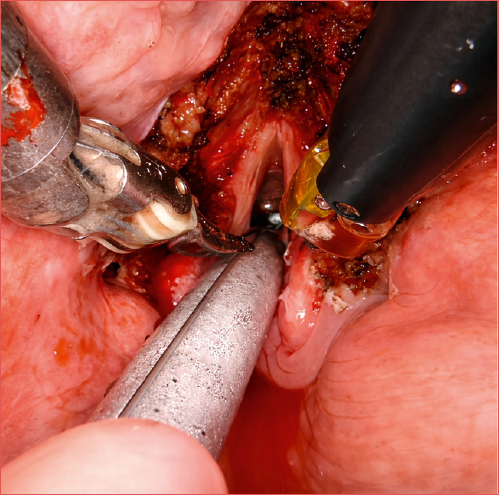
Cover Image
Objective. Organ preservation is a key goal in management of laryngeal cancer. The combination of neadjuvant chemotherapy (NACT) and transoral robotic surgery (TORS) may extend minimally invasive surgery indications, but long-term data remain limited. This study evaluated 5-year oncologic outcomes of TORS with or without NACT in laryngeal squamous cell carcinoma (LSCC).
Methods. We retrospectively analysed 37 LSCC patients treated between 2012 and 2017 with TORS, with NACT administered in advanced-stage disease. Kaplan-Meier analysis was used to estimate overall (OS), disease-specific (DSS), and disease-free survival (DFS). Survival differences were assessed using the log-rank test.
Results. Mean follow-up was 73 months. In patients treated by TORS alone, we observed one-, 3-, and 5-year OS and DSS of 100%, with one-year DFS of 88.9% decreasing to 77.8% at 3- and 5-year, and 100% of laryngeal preservation rate. In patients with locally advanced cT3-4N+ cancer who underwent NACT followed by TORS, 5-year OS, DSS, and DFS were 82.4%, 93.3%, and 61.1%, respectively, with a 84.4% 5-year laryngeal preservation rate.
Conclusions. TORS provides excellent long-term oncologic control in early LSCC. The addition of NACT allows extension to advanced disease while maintaining high laryngeal preservation rates, supporting a multimodal organ-preserving strategy.
Introduction
More than 189,000 new cases of laryngeal cancer occur annually worldwide, corresponding to an age-standardised incidence rate of 3.5 per 100,000 1. Prior to the 1990s, the standard management for locally advanced laryngeal cancer consisted of total laryngectomy followed by postoperative radiotherapy 2. Nevertheless, the considerable quality of life-related issues of laryngeal removal led many patients to favour organ-preserving approaches, even if doing so involved accepting lower survival rates 3. In this context, several organ-preserving strategies were investigated.
Transoral robotic surgery (TORS) for treatment of laryngeal squamous cell carcinoma (LSCC) was introduced in 2007 by Weinstein et al. and has since then achieved widespread adoption worldwide as a minimally invasive surgical approach 4. TORS nowadays is indicated for selected patients with early to moderately advanced LSCC, particularly cT1-T2 and selected T3 5,6.
In this context, neoadjuvant chemotherapy (NACT) followed by TORS has been proposed as a multimodal strategy to extend indications of TORS for selected advanced cancers by reducing tumour burden, thereby enabling minimally invasive surgery while preserving laryngeal function. Park et al. first described this strategy in 2018 suggesting that it could be a safe and effective treatment strategy for laryngeal carcinoma 7. Several other authors have also confirmed the safety and efficacy of NACT combined with TORS in the treatment of LSCC, although these findings are based on studies with limited (approximately 3-year) follow-up and/or small cohorts 8-10.
This study evaluated 5-year oncologic outcomes of TORS with or without NACT in a consecutive series of 37 patients with LSCC.
Materials and methods
Study design and inclusion criteria
Medical records from patients affected by primary laryngeal cancer treated with TORS according to the Park et al. protocol between January 1, 2012, and December 31, 2017, were retrospectively collected 7. Data regarding age, gender, staging, alcohol and smoking status, tumour subsite (glottic or supraglottic), NACT, neck dissection, margin status, death and cancer recurrence were recorded. We excluded patients who histologically demonstrated a neoplasm other than LSCC. Follow-up time was calculated from the time of surgery until the date of last visit and/or radiological exam. The tumours were restaged for the purposes of this study according to the 8th American Joint Committee on Cancer (AJCC) staging manual.
Treatment protocol
All patients were initially subjected to an ENT evaluation and fibreoptic laryngoscopy, and imaging by CT, MRI, PET, and underwent a tumour biopsy with a contextual endoscopic study of eligibility for TORS under general anaesthesia. The treatment to be adopted for each patient was discussed by a multidisciplinary team which included at least one head and neck surgeon, one medical oncologist, and one radiation oncologist.
Early LSCC were treated by TORS with or without neck dissection based on primary tumour localisation or extension (Cover figure). Advanced laryngeal cancers (cT3-4 and/or cN+) were treated with NACT following the TS-1 protocol (Gimeracil + Oteracil + Tegafur for 2 weeks and intravenous cisplatin on the first day of treatment at doses of 70 mg/m2, 5.8 mg/m2, 19.6 mg/m2, and 20 mg/m2, respectively) repeated every 3 weeks. After NACT, they underwent surgery consisting of neck dissection and TORS. After surgery, the choice to proceed with adjuvant therapy was made by a multidisciplinary team based on the pathological results and the adverse features described in the National Comprehensive Cancer Network guidelines. The factors favouring adjuvant therapy were pT3 category or more and/or pN2 or more, lymphovascular or perineural invasion and/or positive margins.
Statistical analysis
Continuous variables were summarised as average ± standard deviation, categorical ones as count and percentage. Kaplan-Meier analysis was adopted to calculate overall (OS), disease-free (DFS), and disease-specific survivals (DSS). Survival differences were calculated using the Log-rank test, and Fisher’s Exact test was used to compare subpopulations. We considered a threshold of p < 0.05 as significant. Statistical analyses and graphs were generated using R software for statistical computing (version 4.2.3; R Foundation for Statistical Computing).
Results
Population characteristics
We collected the medical records of 40 patients treated with TORS for laryngeal neoplasms. Two were excluded because their tumours were not SCC (liposarcoma and myofibroblastic sarcoma), and one was excluded due to inability to receive NACT, despite cT3N2c staging, due to significant comorbidities, including chronic renal failure, diabetes mellitus, and alcoholic cirrhosis (Child-Pugh A). Therefore, 37 patients were included in the final analysis, comprising 33 males (89.2%) and 4 females (10.8%), with a mean age of 65.8 ± 10.7 years. Eighteen patients (48.6%) were active smokers, 13 (35.1%) former smokers, 5 (13.5%) had never smoked, and in one case (2.7%) smoking status was not clearly reported. Among former smokers, the mean time since cessation was 60 ± 54.7 months. The mean tobacco exposure was 49.7 ± 63.7 pack-year overall, 47.5 ± 43.6 in former smokers and 62.2 ± 76.8 in active smokers. Tumour subsites were glottic in 19 patients (51.4%), supraglottic in 11 (29.7%), and involved both regions in 7 (18.9%). Anterior commissure involvement was observed in 12 patients (32.4%), including 10 of the 19 glottic tumours, one supraglottic tumour, and one tumour involving both subsites (Tab. I).
Eight patients were classified as pT1 (21.6%), 11 as pT2 (29.6%), and 18 as pT3 (48.6%). Nodal status showed 29 patients with N0 disease (78.3%), 3 with N1 (8.1%), 4 with N2b (10.8%), and one with N2c (2.7%). According to the 2018 AJCC Staging System, 8 patients (21.6%) were Stage I, 9 (24.3%) Stage II, 15 (40.5%) Stage III, and 5 (13.5%) Stage IVA (Tab. I).
Treatment
Primary TORS was performed in 18 patients (48.7%), while NACT + TORS in 19 patients (51.3%). Eighteen subjects (48.6%) underwent concomitant neck dissection.
Fifteen patients had positive margins (40.5%), with no significant difference among groups (p = 0.72, OR 1.58, Fisher’s Exact test; Table I). Adjuvant therapy was administrated to 12 patients (34.4%), of which 7 received RT only (18.9%) and and 5 (13.5%) concomitant chemoradiation (CCRT). Patients undergoing adjuvant RT received a median of 6300 cGy (IQR 6075-6360). Adjuvant therapy was significantly more frequent in NACT group (p = 0.03; OR = 5.97; Fisher’s Exact test; Table I).
Follow-up
Mean follow-up was 73 ± 28.9 months. A total of 9 (24.3%) patients developed recurrences, and 3 of these (8.1% of the total population) underwent total laryngectomy or laryngopharyngectomy. Therefore, we obtained a global organ preservation rate of 91.9% (Tab. II). One-year OS, DSS, and DFS were 100%, 100%, and 89%, respectively. At 3 years, OS, DSS, and DFS decreased to 94%, 100%, and 78%. At 5 years, the corresponding survival rates were 91%, 96%, and 78%, respectively (Tab. II).
Early stage cancers (non-NACT subjects) had a one-, 3-, and 5-year OS and DSS of 100%. Optimal results were also observed for DFS: the one-year rate was 88.9%, while 3- and 5-year values were 77.8% (Fig. 1).
Considering NACT population only, one-, 3-, and 5-year OS were 100%, 88.2%, and 82.4%, respectively. DSS was 100% at one- and 3-year and 93.3% at 5-year. One-year DFS was 77.8% and remained 61.1% at 3 and 5 years (Fig. 2). Laryngectomies were performed within the NACT subgroup, leading to an 84.4% 5-year laryngeal preservation rate in the cT3-4N+ patients.
Margin status was not significantly associated with OS, DSS or DFS (χ2 = 0.2, p = 0.7; χ2 = 1.4, p = 0.2; χ2 = 2.6, p = 0.1, respectively), whereas patients receiving NACT showed significantly worse OS (χ2 = 4.5, p = 0.03) and DFS (χ2 = 5.2, p = 0.02) but not significantly different DSS (χ2 = 0.9, p = 0.3) compared with those without NACT (Fig. 1).
Discussion
TORS has progressively emerged as a valuable minimally invasive option for management of early and selected advanced stage LSCC 11. In this study, we report long-term oncological outcomes of patients with LSCC treated using TORS, with NACT for higher stage diseases and a mean follow-up of more than 6 years. The results demonstrate excellent disease control and organ preservation in both early-stage TORS-only and cT3-4 N+ NACT subgroups.
In TORS only patients, we observed one-, 3-, and 5-year OS and DSS of 100% with one-year DFS of 88.9% decreasing to 77.8% at 3- and 5-year, and 100% of laryngeal preservation rate. In laryngeal surgery, transoral laser microsurgery (TLM) has traditionally been considered the standard approach for early-stage glottic cancers due to its precision, reproducibility, and excellent functional outcomes, particularly in voice preservation 12,13. However, TORS is emerging as a valuable and increasingly competitive alternative, especially in the management of supraglottic tumours 14,15. Thanks to its high-definition three-dimensional visualisation and wristed instruments, TORS allows for en bloc resections with improved exposure of complex laryngeal subsites 16. While TORS remains technically limited in purely glottic lesions, growing evidence including the present study suggests that in selected supraglottic cancers it can achieve comparable oncologic outcomes with favourable functional results 17. Despite higher costs and resource requirements, TORS may therefore offer distinct surgical and oncologic advantages in anatomically challenging laryngeal cases, supporting its role as an expanding option alongside TLM rather than merely an alternative.
In cT3-4N+ subjects who underwent NACT, we obtained promising survival outcomes. Five-year OS, DSS, and DFS were 82.4%, 93.3%, and 61.1%, respectively (Fig. 2) with a 84.4% 5-year laryngeal preservation rate. Despite the non-direct comparability among those groups given the higher disease stage of disease in NACT treated patients and the paucity of subjects involved, DFS was not significantly different among groups, while OS and DFS were better in non-NACT patients. Margin status did not significantly influence survival outcomes.
Our long-term outcomes compare favourably with those reported after open partial horizontal laryngectomy. For example, an U.S.-based systematic review regarding oncological outcomes of open partial laryngeal surgery used as primary treatment modality reported a 5-year pooled DSS of 92% (range, 84.6-93.2%) for cricohyoidoepiglottopexy and 81.5% (range, 60-86.4%) for cricohyoidopexy 18.
The differences become even more striking when compared with major CCRT-based organ-preservation trials. In the RTOG 91-11 study, 5-year OS ranged from 58.1% in the induction CT plus RT arm to 53.8% with RT alone, while DFS ranged from 38% in the CCRT arm to 28% with RT only. In contrast, our cohort achieved 5-year OS of 91% and DSS of 96%. Similarly, the 5-year larynx-preservation rate in RTOG 91-11 ranged from 65.8% (RT alone) to 47% (CCRT), whereas our protocol resulted in a markedly higher preservation rate of 91.9%. 19 However, these encouraging results must be interpreted with caution, since direct comparisons among different trials are not possible. The lack of randomised, controlled comparison limits definitive conclusions. Nevertheless, our preliminary data appear promising.
The advantage of our NACT treatment protocol, particularly regarding laryngeal preservation, may derive from its multimodal structure: NACT followed by TORS leaves RT and CT as available salvage options for tumour recurrences or adjuvant treatment before radical surgery becomes necessary. Similarly, the excellent DSS likely results from the multimodal nature of our approach: NACT and TORS as initial treatments, with RT/CRT and, if required, radical surgery available as additional lines of therapy.
In fact, in the NACT cohort, we were able to avoid RT in a substantial proportion of patients (66.5%), a significant reduction when compared with TORS-only laryngeal cohorts, where the postoperative adjuvant RT rate has been reported to be as high as 51.6% 20.
This represents an important advantage, given the well-documented risk of radiation-induced second primary malignances 21,22. In addition, patients who received adjuvant radiotherapy were exposed to considerably lower doses than those employed in definitive treatment. While primary RT curative regimens generally administer 66-70 Gy, adjuvant RT typically ranges from 54 to 66 Gy 23; our population received a median of 63 Gy (IQR 60.7-63.6).
Achieving optimal exposure remains one of the principal potential limitations of TORS, especially in laryngeal pathology. Previous studies have described conversion rates to open surgery as high as 20% 24-26. In contrast, we did not encounter any conversion, which we attribute to the rigorous TORS eligibility assessment carried out during the initial biopsy procedure at our institution 27.
This study has several limitations. Although our cohort seems adequate for an initial exploratory evaluation, larger multicentre studies, ideally randomised controlled trials comparing NACT + TORS with nonsurgical protocols (RT/CCRT) and with open conservative laryngeal surgery, are needed to more definitively determine the optimal treatment strategy for laryngeal cancer. The retrospective design also limits the strength of our conclusions, as it introduces potential selection and information biases. Furthermore, the absence of a control group treated with a single-modality approach precludes direct comparison with standard therapies. Finally, functional outcomes (voice, swallowing, quality of life) were not systematically assessed, preventing a comprehensive evaluation of functional laryngeal preservation.
Conclusions
Our findings confirm that primary TORS can be considered an appropriate surgical alternative in early LSCC, especially in supraglottic cases. Furthermore, we demonstrated that a treatment protocol combining NACT and TORS yields excellent long-term oncologic outcomes for selected patients with advanced glottic and supraglottic squamous cell carcinoma. The ability to spare radiotherapy in two-thirds of patients, while reserving RT/CRT for adjuvant or salvage use, represents a potential significant advantage in reducing long-term toxicity and preserving functional laryngeal integrity.
Although limited by its retrospective design and modest sample size, this study supports the feasibility and potential benefits of a multimodal approach centred on TORS. Larger prospective and randomised studies are warranted to validate these findings and to better define the role of TORS in laryngeal cancer management.
Conflict of interest statement
The authors declare no conflict of interest.
Funding
This research received no specific grant from any funding agency in the public, commercial, or not-for-profit sectors.
Author contributions
ADV, PGM, SHK: conceptualization, methodology; ADV, SHK: validation, writing - review and editing, project administration; ADV: formal analysis; PGM: investigation, data curation, visualization; SHK: resources; ADV, PGM: writing - original draft.
Ethical consideration
This study was approved by the Institutional Review Board of Yonsei University Severance Hospital. All procedures involving human participants were conducted in accordance with the ethical standards of the institutional and national research committee and with the principles of the Declaration of Helsinki and its subsequent amendments.
Written informed consent was obtained from each patient for study participation and anonymous data collection and publication.
History
Received: March 22, 2026
Accepted: April 8, 2026
Figures and tables
Figure 1. Survival probability curves by margin status and NACT administration. In the present figure close and positive margins were both included in the positive margins subpopulation. (A) Overall survival by margin status; (B) Disease-specific survival by margin status; (C) Disease-free survival by margin status; (D) Overall survival by NACT administration; (E) Disease-specific survival by NACT administration; (F) Disease-free survival by NACT administration.
Figure 2. Survival curves for the cT3-4 N+ (NACT) subpopulation. A) OS; B) DSS; C) DFS.
| Variable | Overall (n = 37) | No-NACT (n = 18) | NACT (n = 19) | p value |
|---|---|---|---|---|
| Gender | 1.00 | |||
| Male | 33 (89.2%) | 16 (88.9%) | 17 (89.5%) | |
| Female | 4 (10.8%) | 2 (11.1%) | 2 (10.5%) | |
| Mean age (years) | 65.8 ± 10.7 | 64.9 ± 11.2 | 66.6 ± 10.3 | 0.65 |
| Smoking status | 0.89 | |||
| Active smokers | 18 (48.6%) | 8 (44.4%) | 10 (52.6%) | |
| Former smokers | 13 (35.1%) | 7 (38.9%) | 6 (31.6%) | |
| Non-smokers | 5 (13.5%) | 2 (11.1%) | 3 (15.8%) | |
| Not declared | 1 (2.7%) | 1 (5.6%) | 0 | |
| Tumour subsite | 0.42 | |||
| Glottic | 19 (51.4%) | 11 (61.1%) | 8 (42.1%) | |
| Supraglottic | 11 (29.7%) | 5 (27.8%) | 6 (31.6%) | |
| Both | 7 (18.9%) | 2 (11.1%) | 5 (26.3%) | |
| Anterior commissure involvement | 12 (32.4%) | 7 (38.9%) | 5 (26.3%) | 0.73 |
| T category | < 0.001 | |||
| T1 | 8 (21.6%) | 7 (38.9%) | 1 (5.3%) | |
| T2 | 11 (29.6%) | 8 (44.4%) | 3 (15.8%) | |
| T3 | 18 (48.6%) | 3 (16.7%) | 15 (78.9%) | |
| N category | < 0.001 | |||
| N0 | 29 (78.4%) | 18 (100%) | 11 (57.9%) | |
| N1-N2 | 8 (21.6%) | 0 | 8 (42.1%) | |
| AJCC stage 8th Edition | < 0.001 | |||
| I-II | 17 (45.9%) | 17 (94.4%) | 0 | |
| III-IVA | 20 (54.1%) | 1 (5.6%) | 19 (100%) | |
| Neck dissection | 18 (48.6%) | 6 (33.3%) | 12 (63.2%) | 0.11 |
| Adjuvant therapy | 12 (34.4%) | 2 (12.5%) | 9 (47.4%) | 0.03 |
| RT | 7 (18.9%) | 1 (6.3%) | 6 (31.6%) | |
| CCRT | 5 (13.5%) | 1 (6.3%) | 3 (15.8%) | |
| Data are expressed as number (percentage), number, or mean value ± standard deviation. NACT: neoadjuvant chemotherapy; AJCC: American Joint Committee on Cancer; RT: radiotherapy; CCRT: concomitant chemoradiotherapy. | ||||
| Outcome | No-NACT (n = 18) | NACT (n = 19) |
|---|---|---|
| Overall survival (OS) | ||
| 1-year | 100% | 100% |
| 3-year | 100% | 88.2% |
| 5-year | 100% | 82.4% |
| Disease-specific survival (DSS) | ||
| 1-year | 100% | 100% |
| 3-year | 100% | 100% |
| 5-year | 100% | 93.3% |
| Disease-free survival (DFS) | ||
| 1-year | 88.9% | 77.8% |
| 3-year | 77.8% | 61.1% |
| 5-year | 77.8% | 61.1% |
| Recurrences | ||
| Total | 3 (16.7%) | 6 (31.6%) |
| Local | 3 (16.7%) | 6 (31.6%) |
| Locoregional | 0 | 2 (10.5%) |
| Distant | 0 | 1 (5.3%) |
| Recurrence treatment | ||
| Total laryngectomy/laryngopharyngectomy | 0 | 3 (15.8%) |
| CCRT | 2 (11.1%) | 2 (10.5%) |
| RT | 1 (5.6%) | 0 |
| Laryngeal preservation rate (5-year) | 100% | 84.4% |
| CCRT: concomitant chemoradiotherapy; RT: radiotherapy. | ||
References
- da Cunha A, Rumgay H, Vignat J. Global burden and international trends of laryngeal cancer incidence: a population-based study of recorded data and national estimates. Cancer Epidemiol. 2025;99. doi:https://doi.org/10.1016/j.canep.2025.102935
- Bozec A, Culié D, Poissonnet G. Current role of total laryngectomy in the era of organ preservation. Cancers (Basel). 2020;12. doi:https://doi.org/10.3390/cancers12030584
- Laccourreye O, Malinvaud D, Holsinger F. Trade-off between survival and laryngeal preservation in advanced laryngeal cancer: the otorhinolaryngology patient’s perspective. Ann Otol Rhinol Laryngol. 2012;121:570-575. doi:https://doi.org/10.1177/000348941212100902
- Weinstein G, O’Malley B, Snyder W. Transoral robotic surgery: supraglottic partial laryngectomy. Ann Otol Rhinol Laryngol. 2007;116:19-23. doi:https://doi.org/10.1177/000348940711600104
- Hans S, Chekkoury-Idrissi Y, Circiu M. Surgical, oncological, and functional outcomes of transoral robotic supraglottic laryngectomy. Laryngoscope. 2021;131:1060-1065. doi:https://doi.org/10.1002/lary.28926
- Wang C, Lin W, Wang J. Transoral robotic surgery for early-T stage glottic cancer involving the anterior commissure – News and update. Front Oncol. 2022;12. doi:https://doi.org/10.3389/fonc.2022.755400
- Park Y, Keum K, Kim H. A clinical trial of combination neoadjuvant chemotherapy and transoral robotic surgery in patients with T3 and T4 laryngo-hypopharyngeal cancer. Ann Surg Oncol. 2018;25:864-871. doi:https://doi.org/10.1245/s10434-017-6208-5
- Solimeno L, Park Y, Lim J. Treatment outcomes of neoadjuvant chemotherapy and transoral robotic surgery in locoregionally advanced laryngopharyngeal carcinoma. Head Neck. 2021;43:3429-3436. doi:https://doi.org/10.1002/hed.26838
- Wang C, Lin W, Liu Y. Transoral robotic surgery for pharyngeal and laryngeal cancers – A prospective medium-term study. J Clin Med. 2021;10. doi:https://doi.org/10.3390/jcm10050967
- Borsetto D, Sethi M, Polesel J. The risk of recurrence in surgically treated head and neck squamous cell carcinomas: a conditional probability approach. Acta Oncol (Madr). 2021;60:942-947. doi:https://doi.org/10.1080/0284186X.2021.1925343
- Lechien J. Surgical, functional, and oncological outcomes of transoral robotic surgery for cT1-T3 supraglottic laryngeal cancers: a systematic review. Oral Oncol. 2024;159. doi:https://doi.org/10.1016/j.oraloncology.2024.107047
- Vasudevan S, Bryan E, Ericksen E. Transoral laser microsurgery versus radiotherapy for T1-T2 glottic cancer with anterior commissure involvement: a systematic review and meta-analysis. Laryngoscope. 2025;135:1861-1871. doi:https://doi.org/10.1002/lary.32005
- Sjögren EV. Transoral laser microsurgery in early glottic lesions. Curr Otorhinolaryngol Rep. 2017;5:56-68. doi:https://doi.org/10.1007/s40136-017-0148-2
- Papazian M, Chow M, Jacobson A. Role of transoral robotic surgery in surgical treatment of early-stage supraglottic larynx carcinoma. Head Neck. 2023;45:972-982. doi:https://doi.org/10.1002/hed.27325
- Hanna J, Brauer P, Morse E. Is robotic surgery an option for early T-stage laryngeal cancer? Early nationwide results. Laryngoscope. 2020;130:1195-1201. doi:https://doi.org/10.1002/lary.28144
- Karabulut B, Deveci I, Sürmeli M. Comparison of functional and oncological treatment outcomes after transoral robotic surgery and open surgery for supraglottic laryngeal cancer. J Laryngol Otol. 2018;132:832-836. doi:https://doi.org/10.1017/S0022215118001305
- Lechien J, Baudouin R, Circiu M. Transoral robotic cordectomy for glottic carcinoma: a rapid review. Eur Arch Otorhinolaryngol. 2022;279:5449-5456. doi:https://doi.org/10.1007/s00405-022-07514-4
- Saturno M, Shaari A, Yun J. Outcomes of supracricoid partial laryngectomy performed in the United States: a systematic review. Laryngoscope. 2024;134:3003-3011. doi:https://doi.org/10.1002/lary.31273
- Forastiere A, Zhang Q, Weber R. Long-term results of RTOG 91-11: a comparison of three nonsurgical treatment strategies to preserve the larynx in patients with locally advanced larynx cancer. J Clin Oncol. 2013;31:845-852. doi:https://doi.org/10.1200/JCO.2012.43.6097
- Doazan M, Hans S, Morinière S. Oncologic outcomes with transoral robotic surgery for supraglottic squamous cell carcinoma: results of the French Robotic Surgery Group of GETTEC. Head Neck. 2018;40:2050-2059. doi:https://doi.org/10.1002/hed.25199
- Gao X, Fisher S, Mohideen N. Second primary cancers in patients with laryngeal cancer: a population-based study. Int J Radiat Oncol Biol Phys. 2003;56:427-435. doi:https://doi.org/10.1016/S0360-3016(02)04613-8
- Zhu X, Zhou J, Zhou L. Association between postoperative radiotherapy for young-onset head and neck cancer and long-term risk of second primary malignancy: a population-based study. J Transl Med. 2022;20. doi:https://doi.org/10.1186/s12967-022-03544-y
- Anderson G, Ebadi M, Vo K. An updated review on head and neck cancer treatment with radiation therapy. Cancers (Basel). 2021;13. doi:https://doi.org/10.3390/cancers13194912
- Lallemant B, Moriniere S, Ceruse P. Transoral robotic surgery for squamous cell carcinomas of the posterior pharyngeal wall. Eur Arch Otorhinolaryngol. 2017;274:4211-4216. doi:https://doi.org/10.1007/s00405-017-4771-9
- Dabas S, Gupta K, Ranjan R. Oncological outcome following TORS in HPV negative supraglottic carcinoma. Indian J Cancer. 2019;56:9-14. doi:https://doi.org/10.4103/ijc.IJC_172_18
- Ansarin M, Zorzi S, Massaro M. Transoral robotic surgery vs transoral laser microsurgery for resection of supraglottic cancer: a pilot surgery. Int J Med Robot. 2014;10:107-112. doi:https://doi.org/10.1002/rcs.1546
- De Virgilio A, Park Y, Kim W. How to optimize laryngeal and hypopharyngeal exposure in transoral robotic surgery. Auris Nasus Larynx. 2013;40:312-319. doi:https://doi.org/10.1016/j.anl.2012.07.017
Downloads
License

This work is licensed under a Creative Commons Attribution-NonCommercial-NoDerivatives 4.0 International License.
Copyright
Copyright (c) 2026 Società Italiana di Otorinolaringoiatria e chirurgia cervico facciale
How to Cite
- Abstract viewed - 502 times
- PDF downloaded - 163 times